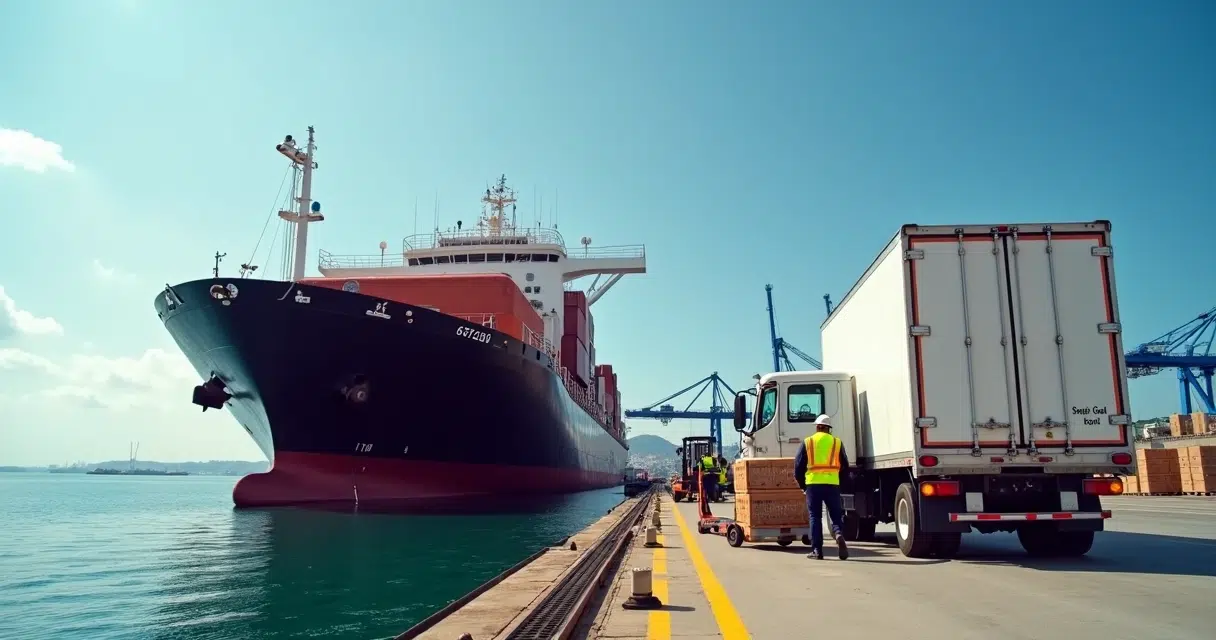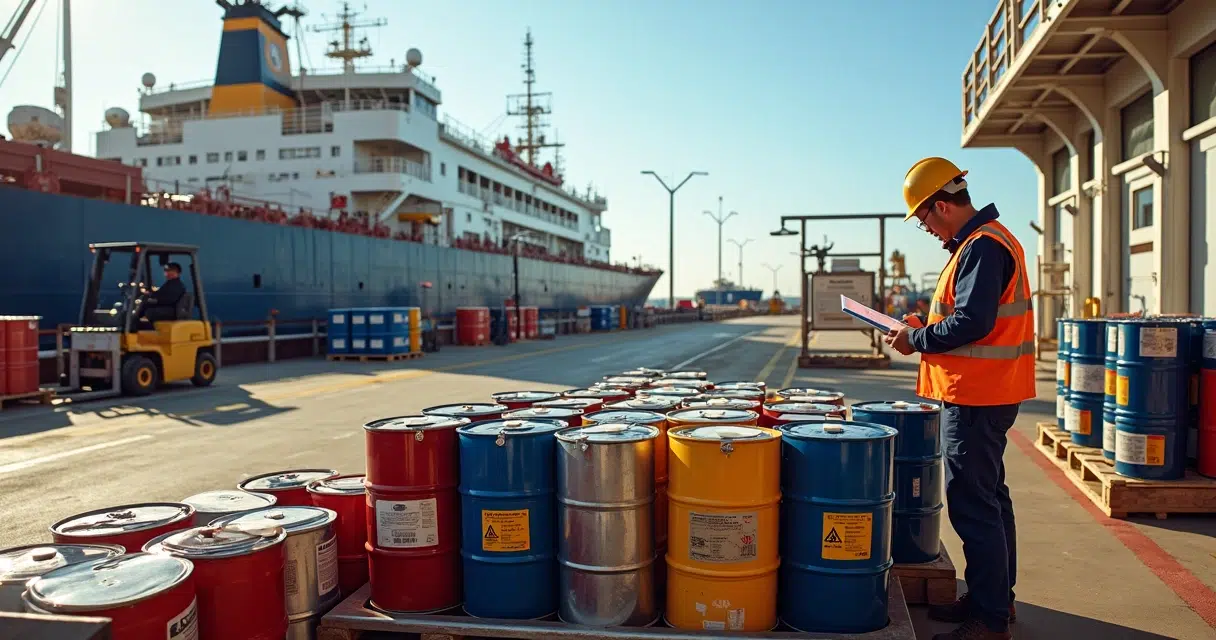
Delivering chemicals, paints, and lubricants to ships is a responsibility we approach with both care and expertise. At Tropical Ship Supply Ltd., we serve all major ports across Brazil and know that proper management of documentation and cargo segregation is not just about compliance—it’s about safety, confidence, and trust at every step. With stringent procedures and a commitment to quality, we work to ensure our clients’ vessels receive their supplies safely, consistently, and responsibly.
Understanding the nature of chemical cargo
In the maritime world, chemicals, paints, and lubricants are everyday essentials. Yet, their delivery poses risks if handled without due diligence. Some substances can react dangerously with others or pose risks if their documentation isn’t kept current and accurate. This is why the Material Safety Data Sheet (MSDS), also known as Safety Data Sheet (SDS), forms the heart of chemical cargo documentation. A well-organized MSDS file, properly maintained and accessible, is the cornerstone of safe delivery for hazardous materials (OSHA’s Hazard Communication Standard).
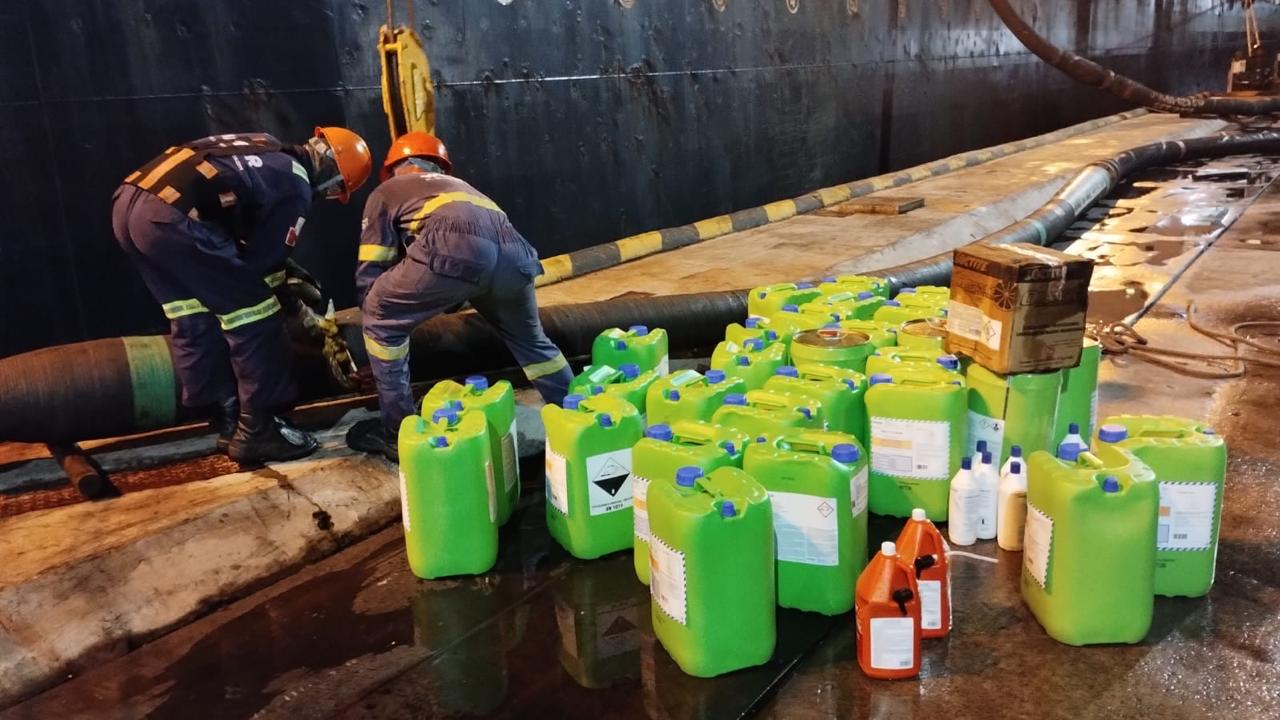
The role of the MSDS: more than a formality
Every shipment of chemicals or paints must be accompanied by a precise MSDS. The document describes the substance’s hazards, handling instructions, emergency procedures, and even details for safe transport and storage. In our daily operations, we make MSDS accessibility a central tenet of safety—crew should never have to search for this information in an emergency. The MSDS is not just paperwork; it’s the first defense against incidents involving hazardous goods (guidance on protecting workers from chemical hazards).
To keep pace with regulations, we make sure all MSDSs are:
- Up-to-date, promptly replacing old versions as new data becomes available.
- Available in English and, where required, in Portuguese for effective local communication.
- Organized according to ANSI’s 16-section format, clearly structured for quick reference.
- Included with each shipment—not just initially, but whenever any update occurs (details on MSDS distribution responsibilities).
Our documentation practices at Tropical Ship Supply Ltd.
From arrival at our warehouse to final delivery onboard, documentation flows with the product. Our team reviews MSDS records during receiving, maintains secure digital and paper backups, and includes clear copies with all deliveries. We know the risk—without prompt access to accurate MSDS data, crew could be exposed to incorrect handling, missed precautions, or response delays.
Up-to-date MSDS access saves lives when seconds matter.
To increase reliability, we provide:
- QR-code access to MSDS files on packaging and delivery dockets.
- Training for port and ship crews on how to locate and interpret MSDS details.
- Continuous monitoring for regulatory updates, ensuring ongoing compliance across all ports served.
Why segregation matters for safe maritime delivery
Chemicals, paints, and lubricants must never be stored or shipped together unless compatibility is confirmed. A common error is treating all “hazardous goods” alike. In reality, small incompatibilities can trigger fires, toxic fumes, or even explosions.
We at Tropical Ship Supply Ltd. prioritize safe segregation with every load, relying on proven classification systems. We follow international guidelines paired with decades of practical local experience at Brazilian ports. This ensures no shortcuts are taken, no oversights allowed.
Our process for segregation
We employ a practical routine that minimizes risks from the warehouse to the vessel, focusing on:
- Grouping chemicals only by compatibility, based on their hazard classes and chemical families.
- Labeling every container in line with international maritime conventions and local legal requirements.
- Physically separating cargo using barriers, distance, or containers—never trusting assumptions about chemical stability.
- Double-checking during loading to match segregation plans with the delivery manifest and vessel storage zones.
This way, not only do we prevent accidents during the voyage, but we make unloading and onboard storage easier and safer for crew and dockworkers alike.
Training and compliance: our foundation for reliable delivery
We consider training an ongoing priority. Our team receives thorough onboarding and regular refreshers, centered around:
- The requirements of the Hazard Communication Standard and Right-to-Know laws (OSHA essential guidance).
- Hands-on use of MSDSs, including critical sections for spills, first aid, and incompatibilities.
- The importance of timely, accurate recordkeeping and immediate reporting of any missing documents or unlabelled goods.
Clients often share stories of past incidents or confusion that interrupted their supply chain—this is where we stand apart. We run compliance as a daily discipline, not just a checklist. Our focus extends beyond paperwork, into real-time verifications during delivery.
Our eco-conscious approach
We combine our commitment to safety with environmental awareness: from reducing single-use plastics in packaging to using renewable energy in our distribution centers. These steps, together with our selective sourcing and waste reduction efforts, align with our values and add peace of mind for every client served. We continue to look for cleaner, safer ways to do business while ensuring that safety and documentation never fall behind.
The outcome: reliability that delivers results
Our clients need to know their cargo is compliant, clearly documented, and delivered with no risk to crew or vessel. By combining a rigorous documentation process with proven segregation practices and a dedication to ongoing training, we reduce delays, minimize hazard exposure, and help ships stay on schedule.
From the port of Santos and beyond, our structure is set up to respond fast, maintain full transparency, and deliver what our clients need—when and where they need it.Learn more about our marine supply network and how we support vessels at every stage.
Conclusion: experience, safety, and partnership
Safety is not just compliance—it is our promise. We have made organized MSDS management and chemical segregation a foundation of service at Tropical Ship Supply Ltd., because we have seen firsthand how it protects people and empowers operations. If you are looking for fast, safe, and expertly managed delivery of chemicals, paints, or lubricants in any Brazilian port, partner with us. Reach out today for a free, no-obligation quote and benefit from the experience of professionals who put your safe voyages first.
Frequently asked questions
What is an MSDS document?
An MSDS (Material Safety Data Sheet) is a detailed document that provides critical information about a hazardous chemical, including its properties, hazards, safe handling and storage instructions, emergency procedures, and first-aid measures. It serves as the fundamental safety reference for anyone interacting with that chemical in a workplace or shipping context (OSHA’s guidance).
How to safely store chemicals together?
Chemical safety storage starts with careful segregation. Only chemicals in compatible hazard classes or chemical families should be stored together. Flammables, corrosives, oxidizers, and other reactive substances should be physically separated by barriers or distance. All containers must be clearly labeled, and storage spaces must be ventilated and checked regularly for leaks or improper mixing.
How to organize MSDS for delivery?
For shipping and delivery, MSDS records should travel with the product. We recommend preparing both paper and digital versions, attached in sealed envelopes or referenced by QR code on the packaging. Every recipient must receive the most current version, and updated MSDS documents must replace outdated versions immediately when new information is available.
What are the best segregation practices?
The best practices for segregation of hazardous cargo include: grouping only compatible chemicals, using physical barriers and clear signage, double-checking compatibility before loading, and labeling each item for its hazard class. Training crew in segregation rules and regularly inspecting storage during transit further enhances safety.
Where to find MSDS templates online?
Numerous regulatory and industry safety organizations provide MSDS templates online, including the Occupational Safety and Health Administration (OSHA). Templates may also be included with the chemical manufacturer’s documentation, or accessed via regulated maritime forums and portals.
For more insights into safe and timely maritime supply—including updates from the industry—visit our maritime blog and news section.