For vessels calling at Brazilian ports, the arrival process has been transformed by digital innovation. Since 2011, paper forms and slow approvals have gradually given way to Porto Sem Papel, Brazil’s sweeping digital clearance platform. For shipping companies, owners, and agents, it’s no longer just about having every document on hand—it’s about understanding this system and acting fast to keep your vessel’s schedule intact.
At Tropical Ship Supply Ltd., we see first-hand how small missteps with documentation can escalate into costly port delays. We also know from our experience as ship suppliers across key Brazilian ports that streamlined port clearances make all the difference. Let us walk you through what matters most in the Porto Sem Papel (PSP) process and how to avoid the traps that slow many operators down.
“Digital documentation is the new anchor of efficiency at Brazil’s ports.”
Understanding Porto Sem Papel and the DUV process
Porto Sem Papel (PSP) unifies documentation, regulatory approvals, and authority interactions in one online platform. The highlight is the Documento Único Virtual (DUV), which centralizes the data required for vessel clearance. PSP now covers 100% of Brazil’s 35 public ports and about 85% of private terminals, drastically reducing bureaucracy and wait times for vessels in Brazilian waters. For the maritime industry, the impact goes far beyond convenience—it’s a leap in reliability, cost control, and sustainability, with PSP already saving approximately 342.8 million sheets of paper and avoiding some 72,000 tons of CO₂ emissions since its rollout (see full impact here).
The Digital Single Document (DUV) is at the heart of this revolution. Once submitted electronically by the ship’s agent, it triggers simultaneous evaluation from all the authorities involved—customs, health, immigration, port administration, and others.
- All sectors are notified instantly
- Edit tracking, status updates, and re-upload requests are managed in one interface
- Approvals feed back directly to the agent, significantly slashing response times
Common causes of documentation delays—according to our experience
In our years of supporting vessels with port clearances and supply deliveries, these are the recurring themes we encounter regarding delays:
- Incomplete DUV submissions. Forgetting even one document—such as the crew list, health declarations, or last port clearance—stalls the forwarding process. The system requires every required document in digital format upfront.
- Incorrect data input or document mismatch. Details on the DUV must match the supporting documentation exactly (vessel name, IMO, flag, ETAs, etc.).
- Unfamiliarity with PSP workflows. Sometimes agents new to Brazil or the DUV template overlook specific field requirements or approval sequences, causing resubmission cycles.
- Delays in coordination with authorities. If one sector (for instance, Anvisa or Receita Federal) requests clarification or additional documents, it can hold up clearance for all.
- Failure to monitor updates or respond promptly to queries online. The system is dynamic—if new requests arise, speed of response is critical.
We have learned that proactive oversight and early engagement with local agencies are the difference between swift clearance and days on hold—and this drives every port operation we coordinate at Tropical Ship Supply Ltd.
Delays are rarely due to the technology itself, but the details in its use.
Key steps to avoid documentation delays at Brazilian ports
Preparation is our best tool. Here is our recommended approach to preventing holdups—and ensuring your call at Brazilian ports stays on schedule:
- Gather all mandatory documents before ETA.Ship’s particulars (full specs)
- Crew list and health records
- Last port clearance
- Ballast water declaration, where relevant
- IMDG (dangerous goods) list if applicable
- Ship’s certificates (registry, insurance, security, etc.)
- Submit the full DUV as early as permitted under local regulations. Many ports allow submission shortly after last port departure or a fixed number of hours before arrival. Early submission buys time to handle corrections proactively.
- Double check consistency of data across all documentation and DUV fields. Use careful copy-paste and review methods to prevent human error.
- Monitor the status of submissions in the PSP interface regularly. Assign responsibility to a trained team member who can check for requests and alerts several times a day.
- Respond to authority queries immediately, with corrected documents in the prescribed format. Fast, accurate answers prevent issues from snowballing.
At Tropical Ship Supply Ltd., our local teams coordinate continuously with port authorities to resolve any document issues as early as possible, a practice shared with clients who rely on our supply and clearance support throughout the Brazilian coast.
 Porto Sem Papel: measurable impact for shipping
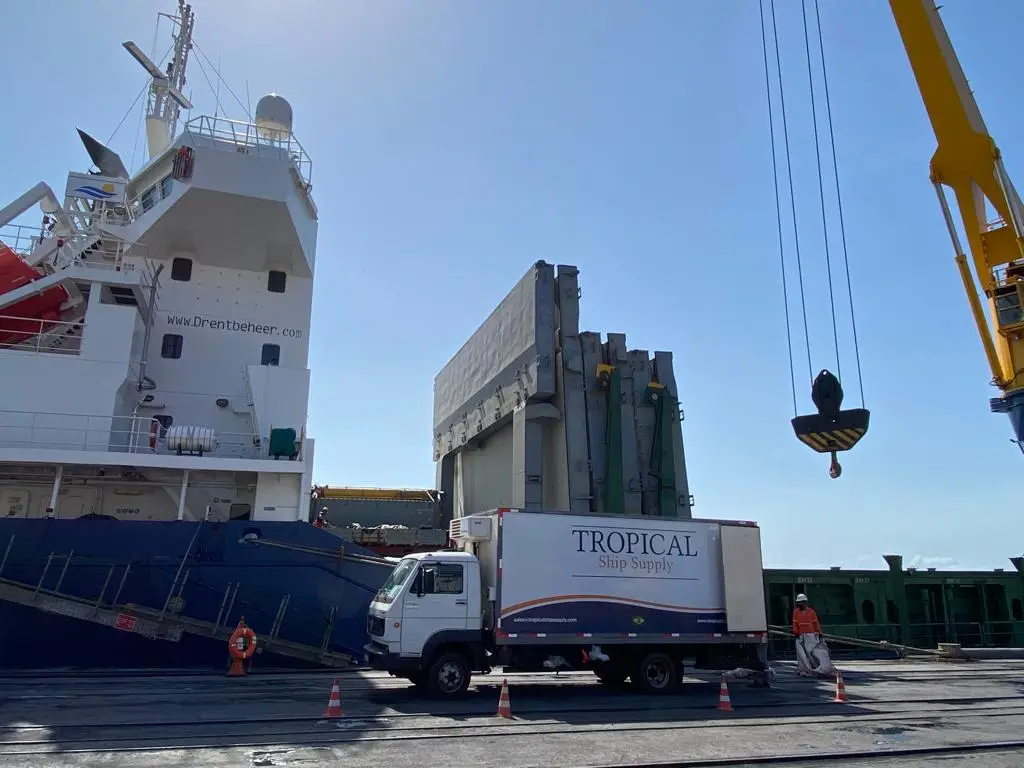 Porto Sem Papel: measurable impact for shipping
Since the Porto Sem Papel system reached 100% coverage of public ports and most private terminals, results are remarkable:
- Average vessel clearance time dropped from 20 days to just four days. This has changed both scheduling and cost management for the better (see the recognition received).
- The system has enabled R$1.32 billion in savings between 2021-2023 by minimizing delays and cutting bureaucracy (financial performance details).
- Projected additional savings for 2024 are R$411 million, plus around R$727 million from reduced docking costs for imports and exports, evidencing direct economic impact from smoother vessel flows.
- The environmental benefit has also been substantial—the system has preserved estimated 30,600 eucalyptus trees and eliminated 1,579 tons of paper use.
We believe that sustainability and speed can—and should—go hand in hand. Our structure is powered in part by solar energy, and our port teams champion quick, paperless processes as part of both our operational commitment and our environmental responsibility.
What shipping agents and vessel masters can do—our final advice
No operator, even with vast experience, can afford to let their guard down with clearance paperwork. We encourage all shipowners, operators, and local agents to prioritize:
- Routine training for crews and on-shore staff on the PSP portal
- Periodic updates and reviews of Brazilian documentation requirements
- Open, timely channels with local clearance authorities
This approach is what keeps our clients moving, whether calling for fresh provisions, technical stores, or urgent repairs. It’s also why so many vessel operators trust our news updates and shipping blog to stay ahead of maritime challenges in Brazil.
To conclude, as Brazil’s ports keep advancing their technology and procedures—highlighted by ground-breaking projects like the Porto Sem Papel system—shipping agents and crew need to adapt along with them. With careful attention, strong local partnerships, and a commitment to digital best practices, documentation delays can be nearly eliminated.
The more you prepare, the more time you earn at port.
Take action with us
Ready for fast, reliable port calls and supply service in Brazil? Tropical Ship Supply supports your operation with on-time delivery, full documentation assistance, and up-to-date expertise on local processes. Experience fewer delays and more value. Contact our team for a quote or to open a conversation—no commitment required:Quotation@tropicalshipsupply.com+55 98 98347-0908 (24hr WhatsApp)
Frequently asked questions
What is Porto Sem Papel system?
Porto Sem Papel is Brazil’s nationwide digital platform for managing all documentation and clearance processes for vessels calling at Brazilian ports. It integrates customs, immigration, health, and port authorities so agents only need to submit the digital DUV once. The system covers all public ports and most private terminals, aiming to reduce paperwork, wait times, and environmental impacts through paperless workflows (read more on modernization).
How to avoid documentation delays?
Prepare all required documents well before arrival, ensure data consistency, submit the DUV early, and monitor requests or status changes frequently on the PSP platform. Prompt answers to any authority inquiries are key. Working with a local expert or ship supply partner greatly reduces risk of oversight.
Which documents are needed at Brazilian ports?
The most common documents are: ship’s particulars, crew list, health declarations, last port clearance, ballast/body water declaration, IMDG list (if carrying dangerous goods), and all current vessel certificates. Specific requirements may vary by cargo or port authorities’ needs.
How does DUV clearance process work?
Once the agent uploads the DUV and all supporting documents to Porto Sem Papel, the system automatically informs all port-related public agencies. Each agency reviews and authorizes or requests details as needed. Final clearance is granted digitally when all bodies have signed off, drastically reducing average processing time from weeks to only a few days.
Where to check document status online?
Agents and vessel representatives check the real-time status directly on the PSP web portal. Any additional requirements or corrections are flagged within the system, allowing faster resolution and constant visibility over each stage of the clearance process.