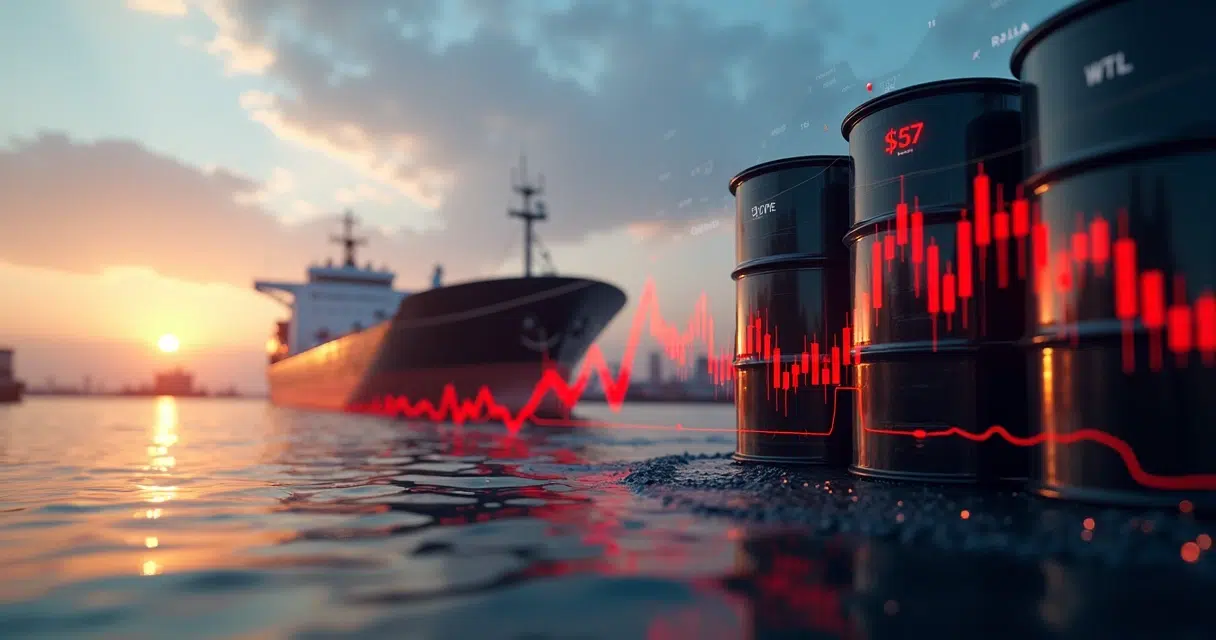
On the first trading day of 2026, the oil market sent a clear and sobering message: prices continued to fall, wrapping up their worst annual performance since 2020. At 11:16 a.m. ET, we observed Brent crude dropping 55 cents to $60.29 per barrel, while U.S. West Texas Intermediate (WTI) declined 53 cents to $56.89. This new reality shaped the market mood and reverberated through shipping, trading, and industrial sectors worldwide.
At Tropical Ship Supply Ltd., we see these price movements not as isolated blips, but as the result of a complex dance between supply, demand, and global geo-politics. Our teams serving vessels across Brazil’s key ports face these fluctuations daily, adjusting strategies and advising our clients on how best to manage the changing cost realities. Let’s walk through the forces shaping oil’s steep drop, consider the risks ahead, and look at what the future may hold for shipping and maritime supply chains.
Parsing the numbers: What’s behind the 2026 oil price drop?
Oil’s slide into 2026 came on the heels of a bruising year—both Brent and WTI fell nearly 20% in 2025, the steepest decline since the depths of pandemic volatility in 2020. For Brent, this marks a rare third consecutive annual loss—a record. The backdrop is a mix of economic, political, and supply-driven factors.
 Here are the core numbers and developments we’ve tracked:
- Brent crude at $60.29 and WTI at $56.89 (Jan 2, 2026)
- Both benchmarks down nearly 20% across 2025
- Global demand growing sluggishly—estimated up just 0.7% in Q3 2025
- World oil supply surging, projected to hit 108.5 million barrels per day by end-2026
- Brent on its third straight year of losses (EIA forecasts)
The pricing reflects not only short-term shocks, but also longer-term signals that global demand isn’t keeping pace with increased production—especially as economic growth stays moderate and alternative energy gains traction.
Oversupply and sluggish demand: The fundamentals
According to the World Bank’s analysis, global oil demand growth remains slow, with Q3 2025’s 0.7% year-on-year gain well below pre-pandemic averages. At the same time, expanded capacity and output from several producers is pressuring prices from the supply side—production is on track for a 3 million barrel per day jump in 2025, with more to come in 2026.
We’ve noticed that for commercial fleets and maritime suppliers like ourselves, this creates unique purchasing opportunities, but also uncertainty. When ships call at Brazilian ports supported by Tropical Ship Supply, our clients are especially keen to time bunker purchases, stock up on ship supplies, and even renegotiate provisions contracts, hoping to lock in value while prices dip. But everyone wonders: will the softness last?
Geopolitical risks: War, sanctions, and shifting alliances
Oil’s downward march isn’t just a matter of balance sheets and tanker arrivals. As investors weigh the threat of oversupply, they must also navigate swirling geopolitical tensions, including:
- Russia and Ukraine’s ongoing conflict, with both sides alleging attacks on civilians during New Year’s Day exchanges
- Ukraine’s escalation of strikes against Russian energy infrastructure, aiming to limit Moscow’s funding for the war
- Fresh U.S. sanctions under President Donald Trump targeting Venezuelan energy companies and oil tankers, intended to squeeze Nicolas Maduro’s regime (U.S. Energy Information Administration press release)
The Trump administration’s new strikes against Venezuelan exports have added a fresh wrinkle, with four companies and related tankers sanctioned on Wednesday, reflecting ongoing Western efforts to clamp down on government revenues. Despite these actions, Venezuelan oil flows have risen, further overwhelming supply.
In our experience, the shipping sector must stay nimble. The fast-changing sanctions environment impacts shipping schedules, insurance costs, and supply chain planning—directly affecting how we serve our partners through Brazilian ports. Geopolitics, as always, remains a wild card for both costs and reliability.
 Middle East friction and OPEC+ expectations
 Middle East friction and OPEC+ expectations
Beyond the war in Ukraine, the Middle East continues to shape oil’s future. Tensions between Saudi Arabia and the United Arab Emirates over the war in Yemen recently led to halted flights at Yemen’s Aden airport. All eyes are now on the January 4 OPEC+ virtual meeting—will the coalition keep production on hold, or turn the tap?
June Goh, a highly regarded analyst, states: “OPEC+ is expected to continue pausing output increases through the first quarter, and China’s stockpiling in early 2026 will likely support prices.” In our view, this is a balancing act. Growing inventories in China offer some support, but without stronger consumption, excess oil keeps markets tilted toward oversupply.
Phil Flynn at Price Futures Group summed up the mood neatly:
“Despite the geopolitical backdrop, the oil market appears steady and well-supplied, with prices in a long-term trading range regardless of events.”
Short-lived shocks vs. lasting trends
One theme runs through all the commentary: recent price moves are shaped by a tug of war between events that can shake confidence (wars, attacks, sanctions), and underlying supply-and-demand math that pushes prices in the other direction.
Priyanka Sachdeva from Phillip Nova explains it clearly: “Flat price movements are anchored in a pull between short-lived geopolitical worries and longer-term oversupply.” We agree. As a ship supply company, we’re used to markets overreacting to headlines—yet fundamentals typically win in the long run.
The market outlook: What could change in 2026?
With so much volatility, where might prices head next? Looking at the data, including official estimates of $59 per barrel for Brent in 2026 and solid supply projections, we see a few possible points of inflection. These could push prices up, or keep them pinned down for much of the year:
- Unexpected disruptions (from weather, politics, or unrest) choking supply
- Stronger-than-expected recovery in global economic activity and travel
- Tighter OPEC+ discipline, especially if members tire of falling prices
- New regulatory frameworks on shipping decarbonization, like those discussed in our coverage of Brazil’s maritime decarbonization dilemma
At Tropical Ship Supply Ltd., we keep informed on all these factors as part of our daily operations—helping clients plan for crew changes, maintenance windows, and supply shipments based on reliable short- and long-term forecasts. The intersection between global energy flows and port logistics gets sharper every year, especially with shifts like Vale’s new Guaibamax ships reshaping iron ore transport (learn more about Guaibamax ships on our blog).
An industry adapting: Freight, fuel, and future rules
The bigger story behind 2026’s price movement is one of adaptation—shipping lines, charterers, and supply partners rethinking procurement, fuel strategies, and risk management. More vessels are optimizing routes, improving fuel efficiency, and re-calculating the economics of different bunker blends in light of stricter environmental policies (see our discussion of Valemaxes’ impact on exports).
There’s also growing discussion in the Maritime Reporter E-News about oil transport and the regulatory frameworks shaping future trade. These debates highlight the importance of robust, transparent supply chains—values that underpin everything we do at Tropical Ship Supply Ltd. Our shipping and maritime news channel (see the latest headlines) remains an essential resource for those navigating this fast-changing world.
Conclusion: Staying agile as oil’s story evolves
To us, the drop in oil prices for 2026 is a signal to stay sharp and responsive. The world may be awash in oil, but surging production is set against a tapestry of political risk, uncertain demand, and regulatory change. For fleet owners, ship operators, and maritime agents making calls in Brazil, we believe the path forward means partnering with trusted suppliers who understand these shifts, keep supply chains resilient, and adapt on the fly.
If you’re looking to manage costs without cutting quality, now’s the time to engage. Tropical Ship Supply Ltd. stands ready to support your vessels with fast, reliable delivery, transparent pricing, and local know-how in Brazil’s North and Northeast ports. Reach out today for a no-obligation quote or supply consultation—let’s face this evolving market together.
Contact our team to discover how we can help you succeed in today’s changing oil landscape: Quotation@tropicalshipsupply.com | +55 98 98347-0908 (24hr WhatsApp)
Frequently asked questions
What caused oil prices to drop in 2026?
Oil prices fell in 2026 mainly because global supply grew much faster than demand, which stayed weak after some years of modest economic growth. Major producers like the U.S., Venezuela, and others ramped up output, while demand remained sluggish due to slower recovery in travel and ongoing shifts towards alternative energy. Geopolitical tensions, such as the Ukraine war and Middle East unrest, mostly added volatility, but the market’s big driver was oversupply, as highlighted by World Bank and EIA studies.
Will oil prices go back up soon?
We think significant price gains are unlikely in the short term. According to EIA forecasts, Brent could average $59 per barrel in 2026, reflecting expectations that production will keep outpacing demand growth. However, surprises—such as new supply disruptions or a sharp global economic rebound—could lift prices temporarily. The market remains highly reactive to unforeseen events, but fundamentals point to continued softness.
How does low oil price affect consumers?
When oil prices drop, shipping, fuel, and transport costs often fall, which can lead to lower prices for goods and services that depend on transport. For consumers, this usually means savings at the fuel pump and on imported products. At the same time, producers earn less, which can slow investment in new projects and eventually affect jobs and local economies tied to oil production.
What are the risks of cheap oil?
Sustained low oil prices can create risks for both producing countries and the global market. Producers may scale back investment, leading to underdeveloped supply chains and possible shortages or price spikes in future years. Lower revenues can also strain national budgets in countries reliant on oil exports. In shipping, unpredictable cost swings make contract planning more uncertain, especially if new regulations tighten margins further.
Is it worth investing in oil now?
The current oil market presents both risks and potential opportunities. Investments in oil-related assets may offer value if prices bounce back, but with global supply expected to stay high and demand growth slow, the near-term outlook remains uncertain. Anyone considering investment should carefully weigh the market fundamentals, geopolitical risks, and sector-specific factors before making decisions.