In the vibrant and demanding maritime environment of Brazilian ports, ensuring reliability, transparency and fast service in all areas is non-negotiable. At TROPICAL SHIP SUPPLY LTD., we believe that applying strict best practices in the management, inspection and verification of bonded stores not only brings more peace of mind to shipowners, but also plays a role in supporting sustainable and competitive ship operations.
The role of bonded stores in maritime supply
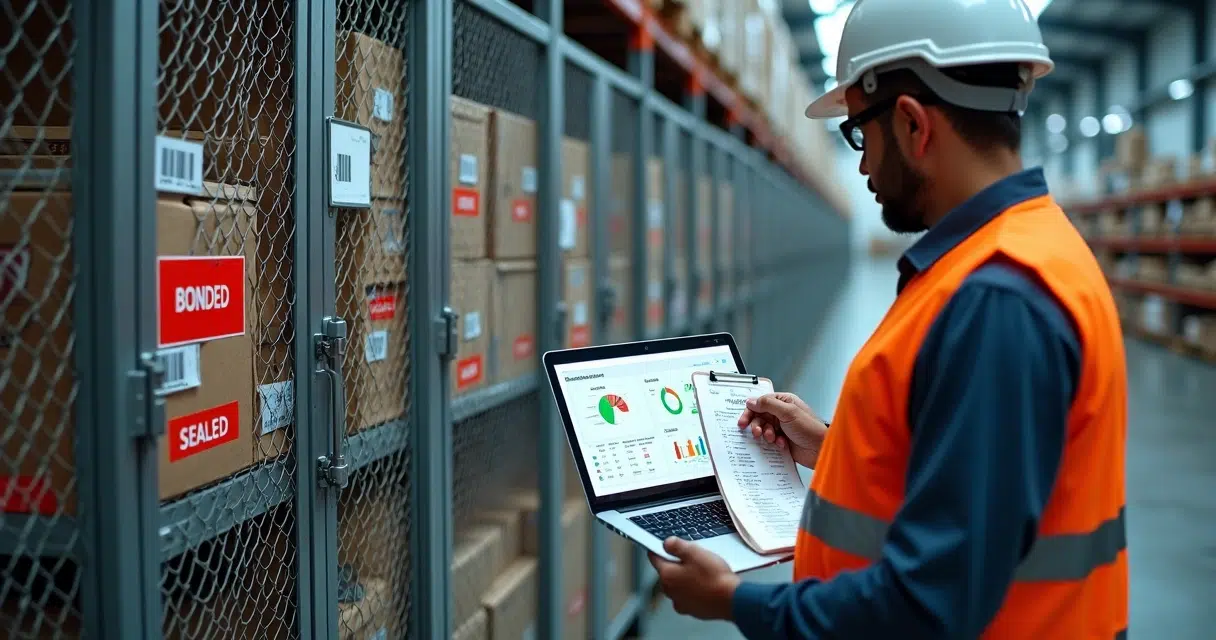
Bonded stores hold goods such as alcohol, cigarettes, chocolates, beverages and luxury items that are stored under customs supervision and subject to specific regulations. For us, their management is a core activity. These stores are not just a matter of compliance; they reflect the professionalism and reliability of our supply chain, directly affecting the satisfaction of the vessels and agents we support.
Every item inside a bonded store is subject to close tracking, thorough reporting and precise documentation. Failures or discrepancies can lead to severe penalties, operational delays, or even long-term reputational losses. Our service on bonded stores is never just about delivery — it’s about assurance.
“Every name on the manifest matters.”
Control: Strategies for robust bonded store management
Rigorous inventory control is the cornerstone of bonded store security and compliance. We implement a blend of manual and digital systems to track product movement, expiration dates, and regulatory requirements. Here are the best strategies that we apply:
- Real-time tracking: Digital records ensure we update product movement instantly, reducing errors and supporting transparency for our clients.
- Physical count schedules: Periodic, scheduled inspections by trained staff are conducted, and results are cross-checked with digital records. This dual method minimizes the risk of “phantom inventory” and untraceable losses.
- Access restriction: Only authorized team members gain entry, all entry points are monitored, and every withdrawal is logged. Security is reinforced as a standard, not as an afterthought.
- Segregated storage zones: Alcohol, tobacco and other regulated products each have specific storage zones, color-coded and physically separated to avoid mix-ups or unauthorized handling.
- Use of advanced technology: We explore RFID tagging and barcode scanning. According to studies from the University of Arkansas, RFID implementation has improved inventory accuracy by more than 7%, which in high-volume operations can mean a significant reduction in discrepancies.
By adopting these systems, we give all parties, from shipowners to customs, greater peace of mind and a real, auditable trail.
 Inspection: Reducing errors through careful checking
 Inspection: Reducing errors through careful checking
Inspection is not just box-ticking; it’s about preventing setbacks before they happen. With every bonded store delivery, we run thorough checks from the supplier through to the vessel handover.
Our strongest practices for inspection include:
- Pre-loading inspection of goods for tampering, correct labeling and expiration dates
- Systematic photographic documentation at critical stages (arrival, loading, delivery)
- Sealing and unsealing of bonded store areas witnessed by both our representative and the vessel’s officer
- Immediate notation and reporting of discrepancies or damaged items with transparent, time-stamped communication
These actions serve two purposes: first, they build a strong defense against disputes. Second, they provide the vessel’s master and chief officer with a clear document trail, a necessity for both customs and internal audit.
 Verification: When proof means everything
 Verification: When proof means everything
Verification is much more than a signature on a slip. We insist on joint verification, all parties involved sign off on a checklist that details each item, its quantity, condition and storage location. This reduces the chance of mismatches between our records and those of our customer or the authorities.
Modern verification also means making every step traceable. That’s why we use:
- Double verification (with client representative and TROPICAL SHIP SUPPLY staff)
- Digital signatures and timestamped data entries
- Electronic archiving for quick retrieval during audits or disputes
When all details are correct and instantly provable, everyone rests easier.
“If a doubt arises, proof should never be more than a click away.”
Reducing discrepancies: Where little things make a big difference
In our experience, even small discrepancies can snowball into bigger issues, especially under the scrutiny of port authorities or during vessel audits. To always keep our records sharp, we take a multi-step approach:
- Regular staff training focused on bonded store protocols and regulatory changes
- Immediate reporting and corrective action plan for noticed discrepancies
- Cross-docking practices to minimize handling and “off-manifest” losses
- Integration between delivery and supply databases to flag any mismatch automatically
Implementing protocols like these at ports such as Santos or Itaqui, where high traffic and demanding timelines are the norm, allows us to maintain both speed and accuracy. For further insight into developments at major Brazilian ports, we recommend our discussion on the expansion and privatization of the Port of Santos.
Transparency and communication: Building trust at every step
Open communication is an integral part of bonded store delivery. We don’t believe in secrets or surprises when it comes to inventory. Each ship agent receives full visibility into the documentation, condition and chain of custody of every item.
This approach, combined with practical digital tools, means we solve problems before they escalate and turn every interaction into an opportunity to build confidence in our process. As outlined on our general ship supply service page, transparency is a core company value.
“Clear records and open channels are at the heart of lasting partnerships.”
Environmental and compliance considerations
Compliance isn’t only about customs. At TROPICAL SHIP SUPPLY LTD., we are firmly committed to sustainability, using eco-friendly packaging, recycling, and investing in renewable energy for our operations, including bonded store logistics. Environmental stewardship means taking care with every shipment, following all applicable laws, and actively working to minimize impact, as detailed in our company’s sustainability promise.
Trends in Brazilian port logistics also show that customers value green credentials, as seen in discussions about the future Northeast logistics corridors. We see it as both a duty and a competitive advantage to act responsibly.
Conclusion: Reliable operations, proven results
At TROPICAL SHIP SUPPLY LTD., controlling, inspecting and verifying bonded stores are daily habits that underpin everything we do. Our experience has taught us that when you focus on precision, constant improvement and open collaboration, you end up building not just better supply chains, but better relationships.
Are you looking for a trusted partner to streamline your bonded stores management, enhance compliance, and cut down on unnecessary risks in Brazilian ports? Get in touch with our team to request a non-binding quote or simply start a conversation, discover how TROPICAL SHIP SUPPLY LTD. can support your maritime logistics for quality, speed and peace of mind.
Looking to reduce costs without sacrificing reliability during calls in Brazil? TROPICAL SHIP SUPPLY LTD. supports vessels with on-time delivery, consistent quality, and local assistance across key ports in the North and Northeast. Contact our team and request a quote: Quotation@tropicalshipsupply.com | +55 98 98347-0908 (24hr) WhatsApp
Frequently asked questions
What is a bonded store?
A bonded store is a secured area, usually inside a port facility or on a vessel, where goods subject to customs control, such as alcohol, cigarettes, and some luxury items, are stored until they are either used onboard or exported. The contents are managed under regulatory oversight to prevent unauthorized access and ensure accurate documentation.
How to control bonded store inventory?
We recommend a mix of digital tracking, scheduled manual counts, access controls, and clear storage zones. Modern technologies like RFID and barcode scanning help to improve inventory accuracy, as shown in studies from the University of Arkansas, which found a 7.1% improvement in accuracy after RFID adoption. These improvements mean fewer discrepancies and more transparency for both shipowners and customs authorities.
What are best practices for inspection?
The best practices we apply include pre-loading checks for tampering and compliance, photographic records at each logistics stage, joint sealing/unsealing procedures, and immediate reporting of any issues or discrepancies. Inspection is most effective when documentation is transparent and mutually agreed upon by all parties.
How to reduce discrepancies in bonded stores?
To reduce discrepancies, we advise regular training, prompt discrepancy reporting, double verification, clear segregation of stored items, and integration of supply management systems. Each of these steps adds a layer of protection against errors or losses, making sure your records and your inventory always match.
Why is verification important in bonded stores?
Verification ensures that every item received, stored or delivered is properly accounted for, in line with both internal controls and customs requirements. This reduces the chance of disputes, penalties or operational delays, and gives all stakeholders confidence that the system is reliable and honest.