Supplying vessels with safe, fresh food is more than a routine—it is a foundation for crew morale and operational safety. Across Brazil’s sprawling ports, we at TROPICAL SHIP SUPPLY LTD. have seen time and time again how careful planning, delivery, and handling can make the difference between a smooth journey and a crisis at sea. Food spoilage is not just a nuisance; it is a threat to health and efficient operations.
Food spoilage is avoidable when vigilance and preparation meet.
Let us walk through the practical steps and hard facts about keeping food safe and fresh on long voyages, based on real-world experience and the latest research.
Understanding the main risks of spoilage at sea
Before we address solutions, let’s recognize why food is at serious risk during weeks at sea. According to the National Science Foundation, the complexity of global food logistics keeps growing, and every added stage is a new opportunity for contamination. Onboard ships, this is magnified by temperature swings, variable humidity, vibration, and storage constraints. These risks lead to the following issues:
- Bacterial growth, especially in fresh meats and dairy
- Mold and fungal contamination, exacerbated by moisture
- Cross-contamination due to compact storage
- Physical spoilage from improper packaging or vibration
In one review published on PubMed, over 50 outbreaks on passenger ships involved nearly 10,000 affected people—Salmonella was the most common culprit. That is not a risk we can afford.
Preparation before departure: The foundation for food safety
Everything begins before the port authority gives clearance. Over the years, we have learned that the way food is sourced, inspected, and loaded is the first defense. Here’s our tried-and-true approach:
- Choose reputable suppliers with documented cold chain management. Temperature abuse during loading is a leading cause of spoilage.
- Inspect deliveries for freshness and correct temperature before accepting onboard. Visual checks are good, but contactless infrared thermometers catch issues early.
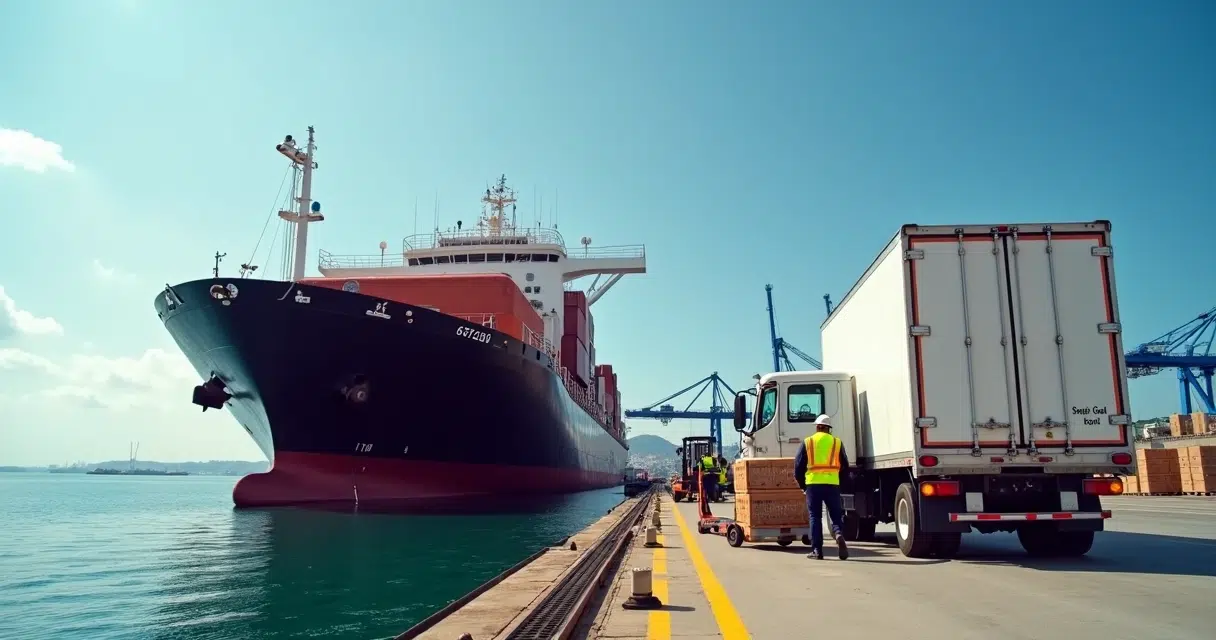
- Demand that perishables are delivered last, minimizing the time between dock and refrigerated storage.
- Label and log all food and provision lots by delivery date and batch.
- Train crew to recognize initial signs of food spoilage and handle food safely from the start.
At TROPICAL SHIP SUPPLY LTD., our focus on rigorous sourcing is central to our promise of safety and quality for every vessel we serve.
 Storage on board: Getting the basics right
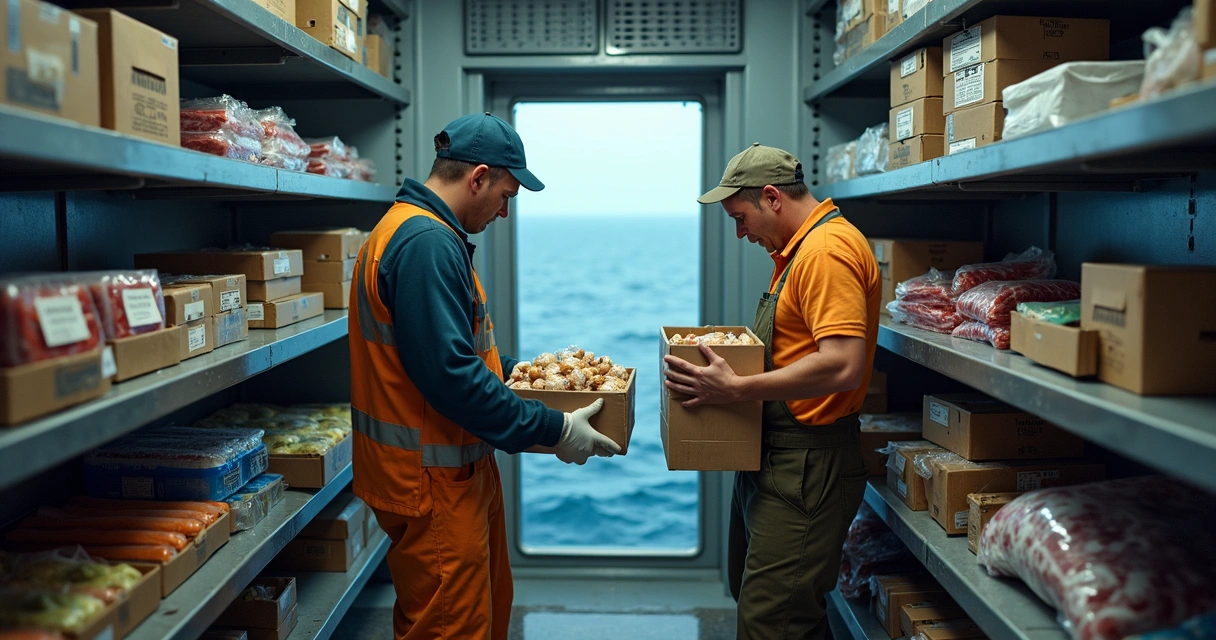 Storage on board: Getting the basics right
Proper storage on a vessel is not just about stacking boxes anywhere there is space. It’s a science. We encourage teams to:
- Use calibrated thermometers in every cold and dry storage area, logging temperatures daily.
- Store goods off the ground to allow air circulation and prevent moisture buildup.
- Follow a “first in, first out” system, so older supplies are used before new arrivals.
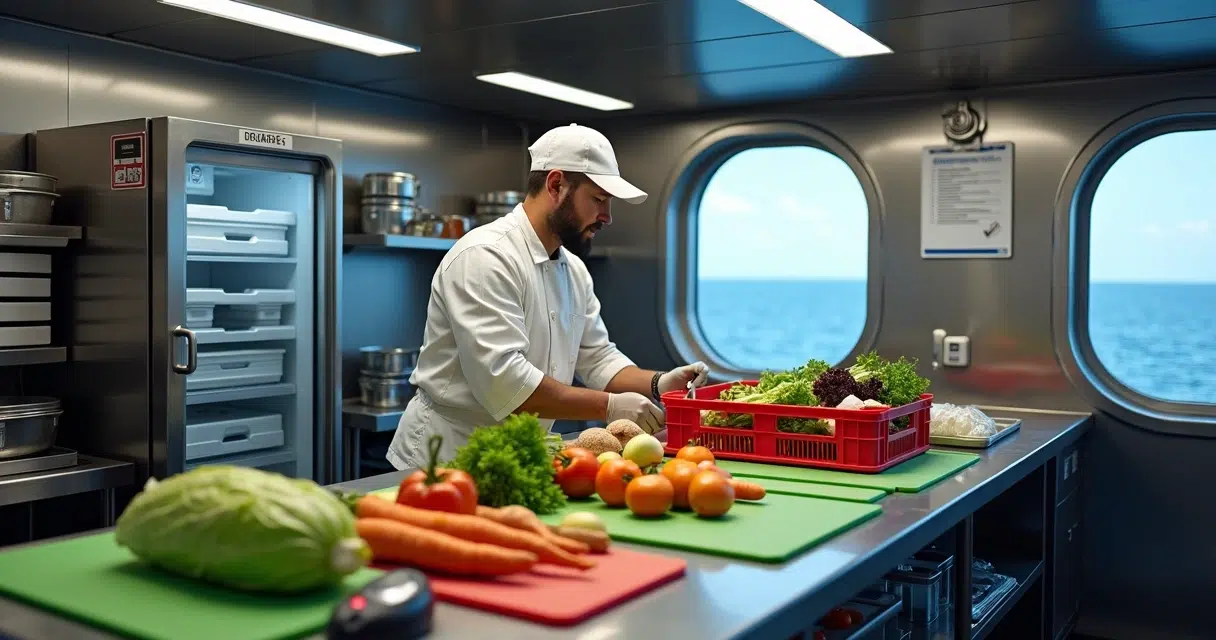
- Separate raw and cooked foods and use color-coded bins to reduce cross-contamination.
- Check for signs of condensation or leaks regularly and act immediately.
Hands-on experience tells us that investing effort into clear labeling and storage discipline pays off—less waste and fewer emergencies.
Packing matters: How packaging reduces spoilage
Studies from the Food and Agriculture Organization make clear that packaging is not just about convenience; it shields cargo from environmental threats. Poor packaging causes millions in food losses each year, as confirmed by MIT research on food aid shipments.
We suggest the following packaging features for ocean crossings:
- Vacuum sealing for meats, fish, and cheeses to block airborne bacteria and slow oxidation.
- Moisture- and vapor-proof linings for dry goods and grains.
- Impact-resistant containers or secondary wrapping for delicate produce.
- Sealable bins for high-value or sensitive cooked foods.
- Clear labeling not only for dates but also for allergen and storage instructions.
Proper packaging is a ship’s invisible shield against bacteria, pests, and rapid spoilage.
Monitoring during the journey: Vigilance pays off
Even with careful sourcing and top packaging, uncontrolled storage conditions can turn supplies into liabilities. This is why we maintain:
- Daily logs for cold rooms, dry rooms, and open provision areas
- Quick responses when temperature spikes or leaks are detected
- Routine rotation of supplies in all areas, including galleys and pantries
- Weekly deep cleaning schedules for storage areas, targeting mold and pests
 These habits, supported by checklists and logs, make issues traceable and help the crew work as a team.
Smart stock choices: Foods that last the longest
Our experience has shown that thoughtful menu planning is central to minimizing waste. In coordination with our clients, we often recommend a core stock that balances nutrition and shelf-life:
- Cured meats like salami and prosciutto, stored chilled
- Dried legumes (lentils, beans, split peas)
- Dehydrated or freeze-dried vegetables and fruits
- Evaporated and UHT milk products
- Canned fish, meats, and vegetables (always inspect for swelling or leakage)
- Hard cheeses, waxed or vacuum-packed
- Long-life breads and crackers, vacuum-sealed
Clever provisioning helps maintain the well-being of all aboard, aligning with findings on nutrition and crew health from this review of seafarer bloodwork and related studies.
Handling waste and spoiled food: What to do when problems arise
On any journey, even a well-prepared crew will face spoilage sometimes. If it happens, strong procedures matter:
- Isolate suspect goods at the first sign of off-smells, slime, swelling, or odd colors
- Log the item and batch, and report the issue to the ship’s officer responsible for provisions
- Dispose of spoiled food according to current maritime health and port regulations
- Clean and disinfect all surfaces and bins in contact with spoiled items before restocking
Quick action on spoiled food protects the health of everyone on board.
Training and teamwork: The human factor in food safety
Procedures are only as good as the people carrying them out. We prioritize regular training for our onboard and onshore teams, reinforcing skills such as:
- Identifying contamination risks and using proper personal hygiene
- Recording and following cold chain instructions to the letter
- Practicing correct cleaning and disinfection methods
Clear communication—from the deck to the galley and back—means problems are solved before they worsen. We encourage vessels to integrate safety culture with daily routines, ensuring that all crew take ownership of shipboard hygiene.
Real impact: Reducing waste, protecting budgets and health
Every spoiled crate is not just a loss; it adds cost and creates risk. The National Science Foundation highlights how global food transportation is both an opportunity and a hazard. In our daily work, we have seen how structured sourcing, handling, documentation, and training can reduce spoilage and raise standards for safety.
International studies estimate that just 1% spoilage of food shipments costs up to $20 million per year. For shipping companies and agencies operating across Brazil’s ports, reducing this number isn’t optional—it is a matter of care, reputation, and the bottom line.
Conclusion: Make every meal count at sea
On a long crossing, where food is both fuel and comfort, avoiding spoilage is up to everyone—from suppliers to the galley. We at TROPICAL SHIP SUPPLY LTD. pride ourselves on not just providing provisions, but also sharing best practices and training for shipboard safety. With the right sourcing, packaging, training, and vigilance, ships can keep their crews safe and healthy. For more details on how we support these standards and our services, see our overview on ship chandler solutions or explore the latest maritime safety news.
A safe galley keeps the whole ship moving forward.
Interested in improving your ship’s food supply and safety programs? Contact TROPICAL SHIP SUPPLY LTD. for a free quote and guidance on reliable, fast, and transparent delivery across Brazil’s ports.
Frequently asked questions
How to store fresh food on a boat?
Store fresh food on a boat by keeping perishable items in dedicated cold storage with consistent temperatures below 5°C (41°F). Place food in airtight containers to prevent moisture and odors from spreading. Stow goods off the floor for airflow, avoid overpacking, and keep raw and cooked foods separate. Daily temperature checks and prompt removal of spoiled items are key to keeping everything safe.
What foods last longest on sea voyages?
Foods with long shelf lives for sea voyages include canned meats, fish, and vegetables, dried legumes, evaporated milk, freeze-dried meals, hard and wax-sealed cheeses, and vacuum-packed whole grains. These items do not need refrigeration and are less likely to spoil quickly. Plan menus with these items to minimize waste and maintain nutrition levels at sea.
How to prevent mold in food storage?
To stop mold growth, keep storage areas dry, well-ventilated, and cool. All foods should be sealed in airtight packaging, and storage areas should be cleaned and inspected weekly. Monitor for signs of leaks or condensation and dry the area immediately if found. Mold grows where moisture lingers, so keep food and equipment as dry as possible.
Is it worth it to use canned goods?
Canned goods are a staple for long ocean crossings because they offer high reliability, safety, and a long shelf life without refrigeration. With proper inspection for dents or swelling before use, canned goods fill diet gaps and minimize food safety risks. Canned items should be part of every supply plan for ships on extended routes.
How can I tell if food is spoiled?
Look for common warning signs: unusual or foul odors, slimy or sticky surfaces, visible mold, changes in color, extra liquid pooling in the packaging, or cans that bulge or leak. If food has an odd texture or the package makes a hiss when opening, throw it out. When in doubt, stay safe by discarding questionable items.
For more practical articles, tips, and industry updates, see our maritime blog news or learn about developments in Brazilian port operations such as Santos privatisation projects.