The movement of live animals from the European Union to the Middle East is a routine part of modern trade. We at Tropical Ship Supply understand first-hand the responsibility and care needed in any maritime operation involving living cargo. Yet, current events have cast stark light on a growing crisis—one where the welfare of animals, the safety of crew, and the stability of the supply chain itself are at risk.
Why live animal exports to conflict zones draw concern
Animal rights groups are not alone in expressing grave concern about shipping live animals to war and crisis zones in the Middle East. Since the escalation of conflicts in countries like Israel and Lebanon, almost 50,000 citizens have signed petitions urging the European Commission to compel Member States to halt these exports immediately. Despite this, live animal shipments persist, spurred by longstanding trade frameworks between the EU and Middle Eastern countries (overview of EU trade relations with Middle East).
The question that echoes: “Why do these shipments continue when the risks are so obvious?” In our view, it’s a combination of economic incentives and complex international agreements that keep this flow alive, even in the face of repeated warnings from regulators and experts on animal welfare.
Ships in danger: Numbers that tell the story
Let us look at the figures: Since February 2026, over 50 live animal transports have left EU ports bound for regions along the Eastern Mediterranean and Red Sea where conflict is ongoing. Most shipments are destined for Israel, with others heading to Lebanon, Syria, Jordan, Saudi Arabia, and Somalia. The Romanian port of Midia stands as the busiest hub, though Raša in Croatia, Sines and Setúbal in Portugal, Koper in Slovenia, and Greenore in Ireland are also involved. In total, 20 livestock carriers made these journeys, several returning time and again, demonstrating this is no minor or temporary activity (news report on controversy surrounding exports).
Seven overlooked risks of exporting live animals to war zones
We want to explain seven critical risks that often go unmentioned in these debates. In our years of experience supplying vessels at Brazilian ports—where safety, reliability, and animal welfare are core values—we’ve learned to recognize what can go wrong. Here’s what stakeholders may not realize:
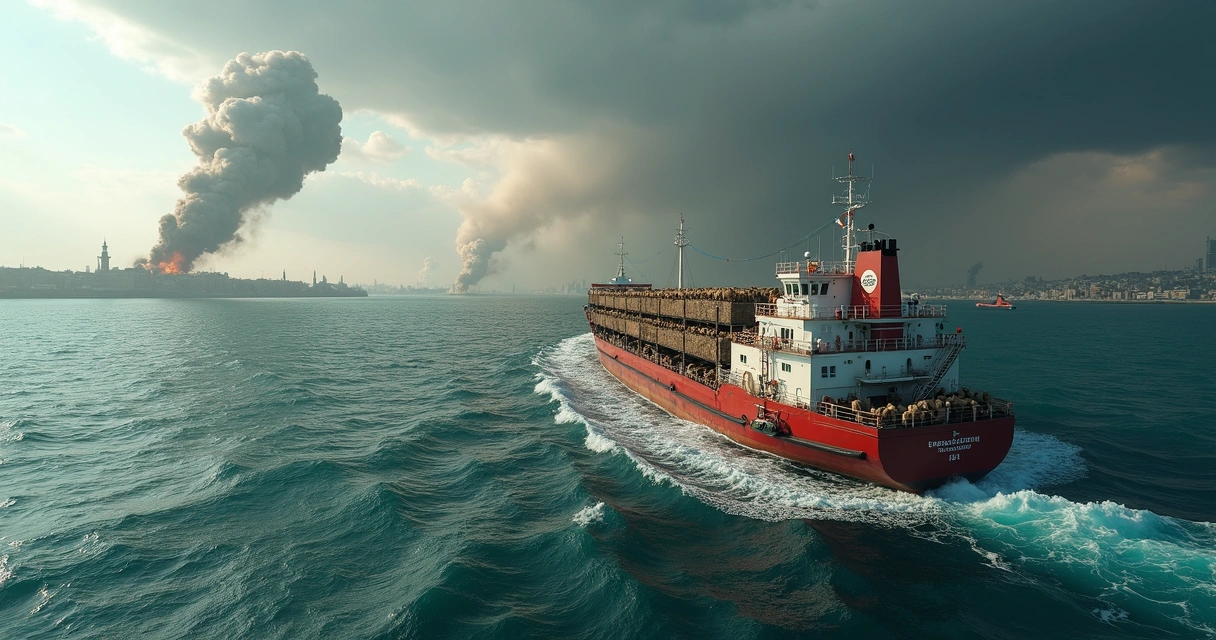
- Heightened risk of attack: Conflict zones are inherently unstable. An Indian-registered livestock vessel carrying 4,000 sheep and goats demonstrated the very real danger recently when it was struck by a bomb or missile off Oman’s coast. Though not a European ship, this episode is a chilling reminder: no vessel is completely safe in or near conflict zones.
- Transport regulation dilemmas: The EU’s Animal Transport Regulation makes clear that animals cannot be shipped if the journey is likely to cause them harm or “unnecessary distress.” Yet, as recent events have made painfully clear, interpretation varies, and the law presently stops short of enforcing a blanket ban even as violence intensifies. The European Commission has instead advised Member States to help keep cargoes moving by issuing replacement certificates if trouble arises in transit.
- Crew safety under threat: Every cargo of living animals includes a crew on board. These professionals risk their lives not only through enemy action but also through breakdowns in port security, unpredictable blockades at sea, and potential capture or detention.
- Animal welfare breaks down under stress:
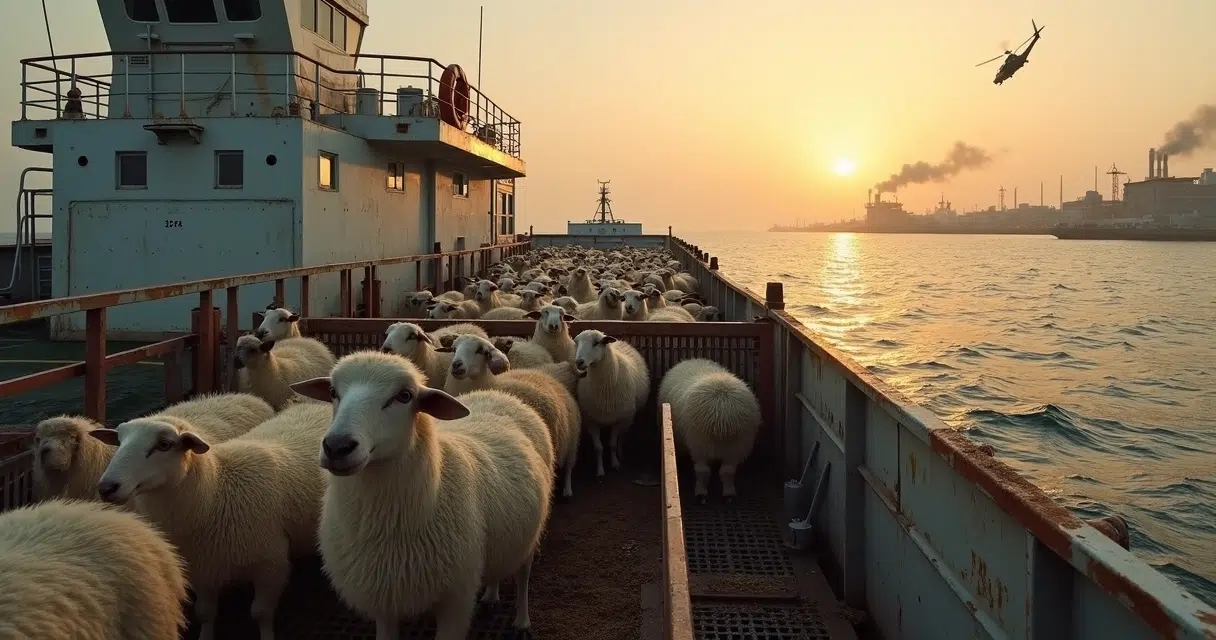
Conditions for live animals often deteriorate rapidly on ships exposed to stress, long waits, or detours—problems that multiply in war zones. Reports from a shipment of 70,000 sheep from Romania highlighted conditions with sweltering heat and a lack of proper oversight, leading to mass animal suffering (critics saying onboard temperatures reached dangerously high levels).
 Shipping disruptions shake the trade: Wartime means erratic port closures, rerouted ships, and last-minute changes. Blockades and no-go zones put both the survival of animals and the viability of critical supply routes at constant risk (recent conflicts in the Middle East disrupted shipping).
- Regulatory and documentation hurdles: Administrative confusion during conflicts often prevents proper checks, and replacement certification schemes sometimes scramble to keep pace. Any lapse in paperwork may mean delays, missed deliveries, or official disputes far from safe harbor.
- Environmental consequences escalate: Accidents involving livestock ships—particularly in hazardous zones—can cause both animal suffering and catastrophic pollution through corpses, waste, or damaged fuel. Immediate response is hard to organize amidst crossfire or shifting front lines.
 Shipping disruptions shake the trade: Wartime means erratic port closures, rerouted ships, and last-minute changes. Blockades and no-go zones put both the survival of animals and the viability of critical supply routes at constant risk (
Arguments and realities: Where law meets risk
 Arguments and realities: Where law meets risk
Stéphane Boissavy of Welfarm has pointed out that every transport to or through an active war zone exposes livestock to major, preventable dangers. The law (EU Animal Transport Regulation) was designed for the normal hazards of maritime trade, not the specific chaos of ongoing hostilities. Yet, despite petitions and protests—including nearly 50,000 signatures demanding a change—the Commission has explained that EU law does not authorize a total ban. Instead, the focus remains on “mitigation,” leaving exporters and authorities caught between obligations and obvious threats. This contradiction leaves both animals and people in a vulnerable position.
Why does the trade continue?
Simply put, there is no blanket prohibition on these shipments. In fact, the Commission has instructed Member States to do what they can to permit ongoing trade. The reason, undeniably, lies in the importance of strong bilateral agreements and the deep integration of agricultural supply chains to the Middle Eastern market (importance for EU agricultural exports). For many exporting nations, the risks—however extreme—are seen as costs of doing business rather than reasons to halt trade outright.
Global supply chain and vessel support
At Tropical Ship Supply, we understand what is at stake every time a vessel enters a challenging environment. Our operations in Brazilian ports teach us that reliable support, safe supply procedures, and upholding the highest quality standards aren’t just slogans—they are essentials when human and animal lives depend on us. Our commitment is always to support crews, ensure resilience, and maintain transparency for every partner, regardless of circumstances.
For those wishing to know more or seeking the latest on the evolving situation, our news and maritime insights at our maritime news section provide ongoing updates. We also regularly discuss key themes in international trade—track those developments as needed at our international trade resource.
Conclusion: The risk is real—and ongoing
The stream of live animal exports from the EU to the Middle East remains strong, even as violence continues in major ports and shipping channels. The risks for animals and crews are not hypothetical—they are happening now, and with every new shipment, the dangers only mount. Reliable, ethical maritime service means keeping this reality front of mind, always prioritizing proactive solutions and safety, even where international law or precedent lags behind the urgent lessons of the present.
Supply chains don’t pause for conflict—our responsibility never does either.
If your team needs reliable, transparent, and safe support for maritime logistics in Brazil or beyond, reach out to Tropical Ship Supply and experience firsthand how we balance speed, quality, and ethical standards with every operation.
Frequently asked questions
What is live animal export?
Live animal export refers to the transportation of animals (such as cattle, sheep, or goats) by ship or land to another country, usually for breeding or slaughter purposes. These shipments are subject to international trade agreements and strict regulations governing animal welfare and safety throughout transit.
What risks are faced during exports?
Risks include threats from conflict (such as missile strikes), shipping delays, animal welfare issues like heat exhaustion or overcrowding, crew and animal safety under attack, regulatory problems, and environmental hazards resulting from accidents or animal mortality at sea.
How safe is animal export to war zones?
Not very safe. Exporting animals to active war zones exposes them and their human handlers to unpredictable violence, disruptions, and breakdowns in care. Even with regulatory guidelines, actual practice often falls short amid chaos and danger.
Is it legal to send animals to war zones?
Currently, EU law does not expressly prohibit exports to countries in conflict, but it mandates animals must not endure unnecessary suffering. While authorities may issue new certificates to replace lost or delayed ones, there is no general ban, leaving a legal “grey area” exploited by ongoing trade.
What alternatives exist to live animal export?
Alternatives include exporting processed meat instead of live animals, developing local slaughter and refrigeration capacity in importing countries, or pursuing agreements to reduce animal transport times—options that can reduce stress, losses, and ethical concerns for animal welfare.