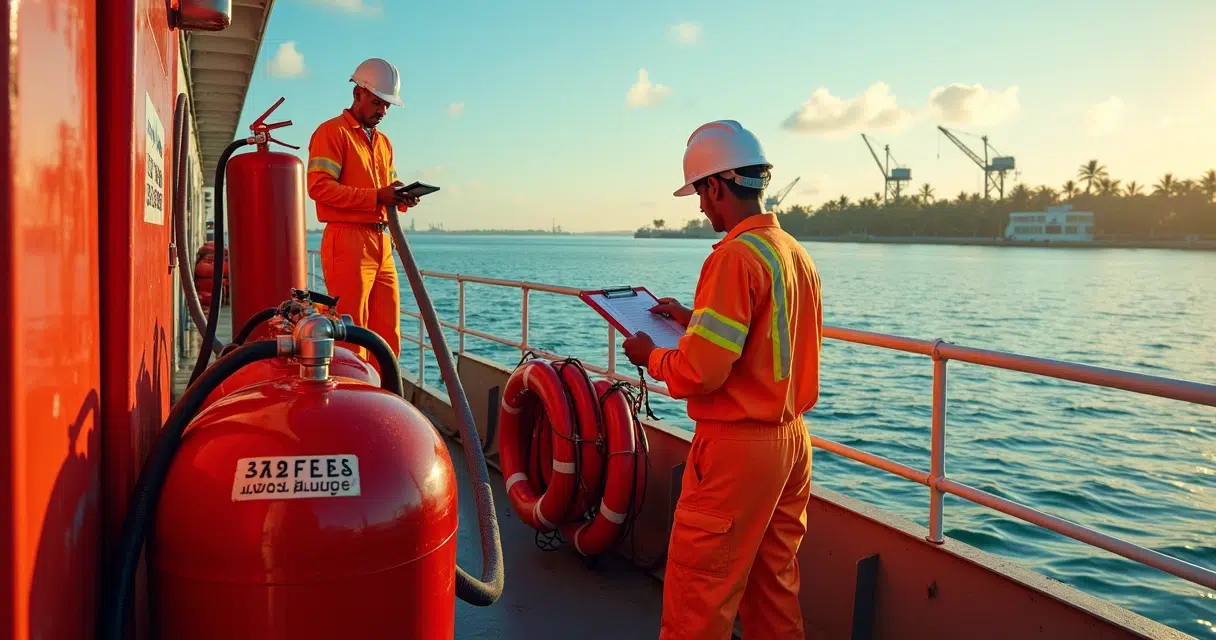
Operating a vessel in tropical climates brings unique challenges. The high temperatures, humidity, strong sunlight, and salt-laden air test the durability of every piece of safety equipment on board. At TROPICAL SHIP SUPPLY LTD., we know from experience how these environmental factors can speed up wear and reduce reliability. We want to share seven tips that help keep shipboard safety equipment ready and dependable when it matters most.
Understanding the tropical challenge
The tropics offer beautiful views and thriving shipping lanes, but beneath the surface, the climate is harsh. Metal corrodes faster, plastics become brittle, and even the most rugged fabrics can fail. The analysis of marine insurance and operational data shows that weather events account for almost a third of ship losses worldwide. That fact alone spotlights the need for exceptional attention to safety equipment.
Sun, salt, and humidity do not discriminate, they damage everything on deck.
Our team constantly sees how the smallest details, like a blocked nozzle on a fire extinguisher, or a cracked seal on a life raft container, can make a huge difference in an emergency. The key is in proactive, frequent, and climate-specific care.
1. Inspect for corrosion and UV damage regularly
In the tropics, metal parts corrode faster, and plastics as well as rubbers degrade quicker due to ultraviolet (UV) exposure. Our advice is to schedule visual inspections more frequently than you might in other regions.
- Pay attention to hinges, buckles, or connectors on life jackets and harnesses.
- Examine fire extinguishers, storage racks, and critical fastenings for rust and flaking.
- Check plastic and rubber components on alarms, emergency lights, and first aid kits for cracks or fading.
Regular UV and corrosion inspections help catch early signs of failure before they become dangerous.
Make sure that records are kept of every check, and if something looks out of place, fix it right away.
2. Clean equipment and storage spaces often
It is easy to underestimate the value of routine cleaning. Salt deposits can build up quickly, causing corrosion and sticking mechanisms. We always recommend cleaning not just the equipment, but also the lockers, racks, and containers they are stored in.
 Rinse gear with fresh water after exposure to salt spray.
- Use mild, non-abrasive cleaners for sensitive components.
- Wipe electrical panels dry and allow air to circulate where possible.
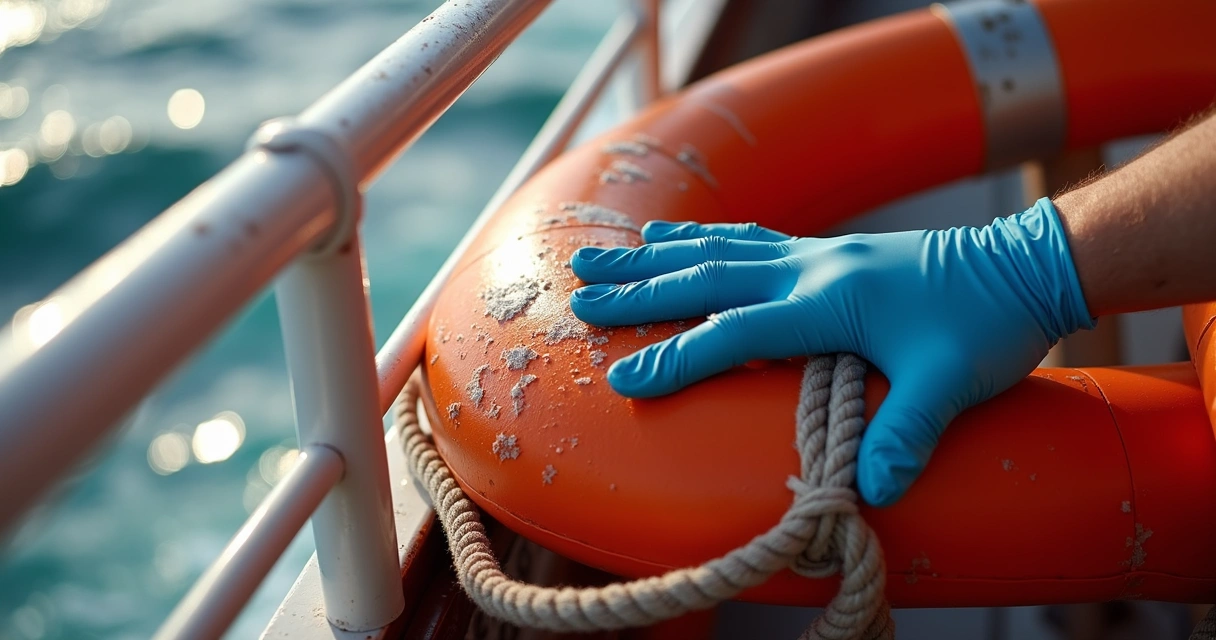 Rinse gear with fresh water after exposure to salt spray.
This process helps reduce corrosion, prevents fungus or mold, and maintains clear labeling on equipment.
3. Schedule more frequent functional testing
Tropical heat and moisture can change the way safety equipment behaves. We always advise going beyond the minimal requirements.
- Test smoke and gas detectors often, as humidity can affect sensors.
- Manually check the release and inflation of life rafts where allowed by regulations.
- Start and test emergency lighting and alarms regularly to confirm that batteries have not degraded in the heat.
“Test it more, trust it more.”
It is our experience that a little extra effort here builds a lot of confidence on board.
4. Protect equipment from direct sunlight and salt spray
Sometimes gear is installed in the open by necessity. Still, whenever possible, use shields, covers, or shades to reduce direct exposure.
- Use UV-resistant covers for life rings and throw lines.
- Install shades on emergency escape paths and protect electrical panels.
- Keep portable gear (like breathing apparatuses) stored inside weather-tight, ventilated lockers.
We find that simple protective steps extend the service life of safety systems and limit costly replacements.
5. Rotate and renew perishables frequently
Supplies such as first aid dressings, flares, batteries, and water rations break down faster in tropical heat and humidity. At TROPICAL SHIP SUPPLY LTD., we help our clients set a smart rotation schedule.
- Label perishables clearly with expiry and installation dates.
- Move the oldest products to the front so they get used first.
- Monitor seals on water rations and vacuum-packed kits for any sign of humidity inside.
Supplies that look fine on the outside can lose effectiveness due to unseen heat-related changes.
By pacing out stock and renewing before expiry, we prevent last-minute scrambles for replacements.
6. Provide ongoing training on tropical maintenance
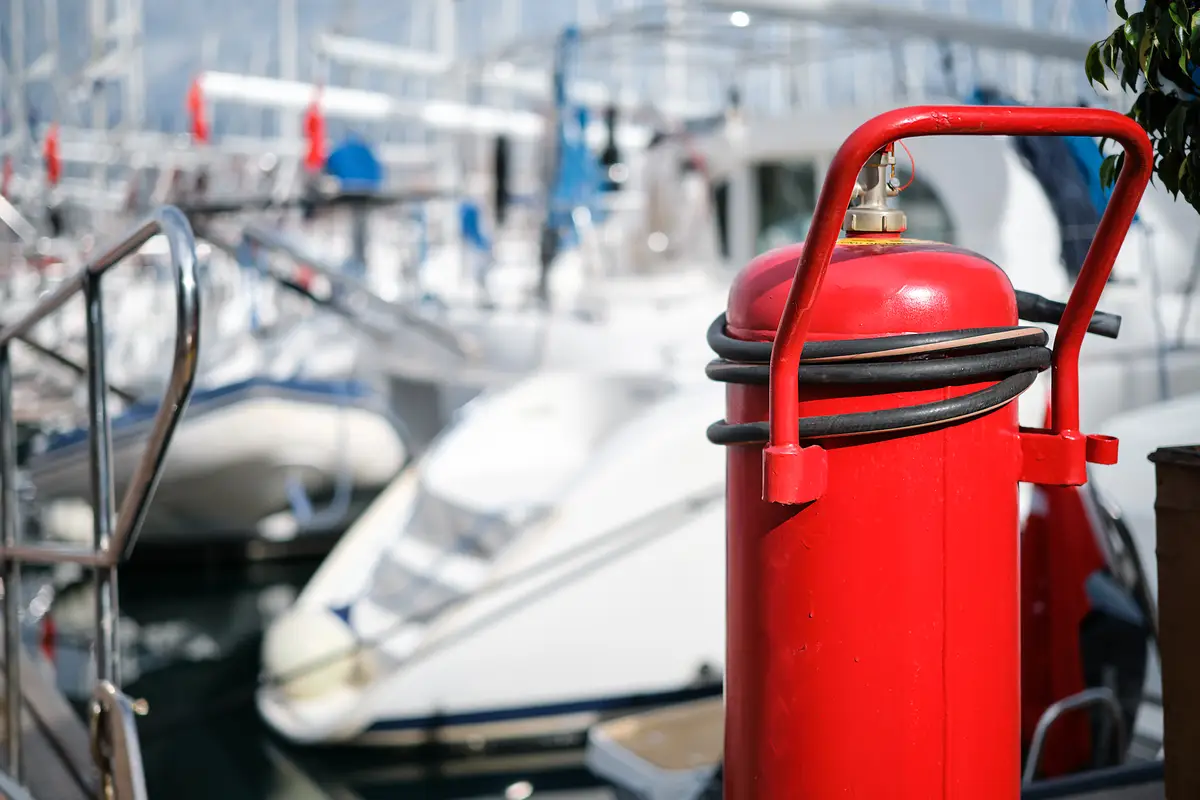 6. Provide ongoing training on tropical maintenance
People are the most valuable part of any safety system. We have seen countless times that well-trained crews catch problems early.
- Run refresher sessions focused on the specific challenges of the tropical climate.
- Teach the symptoms of UV and moisture damage.
- Make sure all watchkeepers know the schedule for checks and cleaning.
Crew with recent, climate-focused training respond faster and make better decisions.
For lessons on shipboard emergencies and real-life incidents, some of our most read content comes from our insights on maritime safety found in our maritime news section and articles such as our feature on the Morning Midas car carrier disaster.
7. Partner with trusted suppliers for climate-ready gear
We have observed that working with suppliers who understand the local climate makes a significant difference. At TROPICAL SHIP SUPPLY LTD., we help shipping clients select gear built or certified for tropical service.
- Ask for documentation that shows resistance to salt, humidity, and UV.
- Consult with local experts for alternatives if certain types are prone to rapid degradation.
- Schedule timely re-supply to avoid running low on critical items.
We have seen time and again that locally tailored solutions prevent downtime and reduce losses.
More on how a local approach helps can be found in our insights about Brazil ship supply operations and how we support vessels at key North and Northeast ports.
Conclusion
Shipping in the tropics is demanding, challenging crews and their equipment in ways rarely seen elsewhere. Extra care, regular maintenance, and local expertise make all the difference when safety is put to the test. At TROPICAL SHIP SUPPLY LTD., we believe that any vessel can build resilience through attention to detail, smarter checks, and strong partnerships.
For advice, reliable supply, or to request a personalized quote for your next port call in Brazil, reach out to our team. Trust in local support for safety you can count on.
Frequently asked questions
What is shipboard safety equipment?
Shipboard safety equipment includes devices and systems designed to protect crew, passengers, and vessels during emergencies. This covers life jackets, lifeboats, life rafts, fire extinguishers, alarms, emergency lighting, personal protective gear, and emergency medical kits. It also involves gear to detect hazards and help with safe evacuation.
How to check safety gear in tropics?
Check safety gear in tropical climates by increasing the frequency of visual inspections, paying special attention to corrosion, cracks, and faded parts from UV exposure. Test electrical and signaling components more often, clean equipment with fresh water, and store items away from direct sunlight and salt spray. Keep written records and replace any suspect items before they fail.
Why does tropical climate affect equipment?
The tropical climate speeds up the aging of equipment because high humidity, intense sun, salt, and heat attack materials constantly. Metal corrodes, plastics degrade, rubber hardens or cracks, and adhesives can weaken or melt. Shipyard workers face higher rates of injury in hot, humid areas, highlighting how climate pushes equipment towards failure when not cared for properly.
How often should I inspect equipment?
We recommend inspecting critical safety equipment at least monthly in tropical climates, and checking vulnerable gear even more frequently if exposed on deck. Some items like life-saving appliances, flares, and batteries should be checked according to their manufacturer’s instructions or every two weeks if local regulations suggest it.
What are the best maintenance tips?
The best tips include inspecting for corrosion and UV damage, cleaning gear and storage spaces often, testing equipment more frequently, protecting gear from sunlight and salt, rotating perishables, providing climate-focused training, and sourcing gear designed for tropical service. Following these steps keeps equipment reliable and ready at all times.
For more updates and learning on maritime operations, explore our maritime blog news section or discover how the Port of Santos privatization is shaping Brazil’s shipping future.