
Bonded stores are at the core of daily maritime operations and efficient global trade. At TROPICAL SHIP SUPPLY LTD., with our vast experience across ports in Brazil, we’ve seen that the smallest lapses in managing bonded stores can quickly turn into major regulatory headaches or avoidable losses.
The key is adopting concrete, replicable practices for control, routine checking, and documentary proof. This is how we support transparency, protect profits, and stay ahead of recurring issues in ship supply. Let us share the strongest methods for teams managing bonded stores, keeping vessels and stakeholders safe—even when timelines are tight and expectations even tighter.
Why bonded stores management matters
Bonded stores include tobacco, alcohol, and other goods kept under customs control until they are sold or used under specific regulatory conditions. Missteps risk more than fines—they can stall a ship and damage reputation. Because we work alongside authorities and demanding ship operators daily, at TROPICAL SHIP SUPPLY LTD. we have learned:
- Discrepancies attract regulatory scrutiny and risk cargo delays.
- Strict control means fewer last-minute surprises at inspection.
- Clarity in records protects crews and agents from accusation.
Reliable bonded stores control is not just about following rules—it’s about keeping vessels moving and profitability protected.
Building strong systems: Control techniques that work
Our control process is systematic, covering both logistics and documentation. This does not happen by chance. The following practices help us achieve fast, error-free operations and safeguard against irregularities:
- Separation and physical inventory:
- Every bonded good has a designated, secure space physically separated from all other supplies. Once goods arrive, our staff conducts an immediate physical count and matches it to delivery documentation—before anything touches the storage area.
- Integrated inventory logs:
- We keep real-time logs. Every bonded item’s movement in and out is logged with item, quantity, date/time, reason, and responsible person. Even for small removals, we do not skip a single detail. Studies using simulation methods have shown that frequent accuracy checks and immediate process adjustments are critical in reducing discrepancies according to research on causes of positive inventory discrepancies.
- Clear role assignments:
- Control means everyone understands their job. Only designated, trained personnel handle bonded goods. Access is logged and limited, preventing confusion and accidental errors in store entries and withdrawals.
- Dual verification for every transaction:
- At every stage—receiving, moving, or issuing items—we require at least two signatures or approvals. This supports our zero-blame environment while tightening up error tracking. Mistakes become fixable events, not patterns.
- Daily reconciliation:
- We perform end-of-shift reconciliations and spot checks. This avoids the build-up of undetected discrepancies and supports real operational awareness, not just paperwork compliance.
Physical checks and quick reconciliation stop discrepancies from growing.
 Verification routines: Checking bonded stores right
 Verification routines: Checking bonded stores right
Verification is more than a tick-box activity. We blend daily habits with periodic depth checks. In our experience, effective verification means:
- Regular random checks by supervisors not involved in daily handling
- Immediate documentation of findings, with anomalies flagged and explained—never erased
- Clear handovers at shift changes: outgoing staff review records and inventory with the incoming team
- Escalation procedures: any discovered issue gets reviewed by senior personnel, not hidden or minimized
This is not just to pass an inspection. We know that sharp verification gives confidence to shipowners and authorities alike.
 Documented proof: Reducing discrepancies with clear records
 Documented proof: Reducing discrepancies with clear records
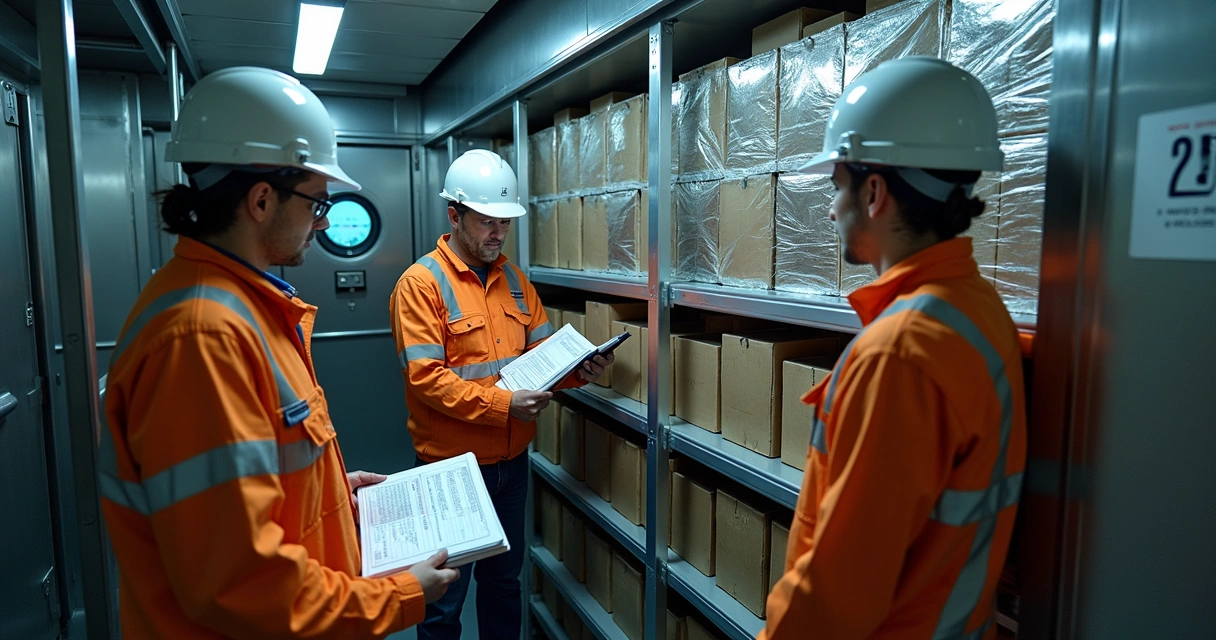
Even when our teams perform flawlessly, proof is the lifeline. Here’s what we insist upon for strong documentary evidence:
- Manifest detail: Each bonded store manifest mirrors the actual inventory, item by item, with serial numbers or batch codes if applicable. Missing this jeopardizes any later investigation or compliance check.
- Signed receipts and withdrawal slips: Every item entry and removal is acknowledged by the person responsible on both the giving and receiving side, tying every movement to an individual and a moment in time.
- Audit trail: We archive digital and paper records, making sure that every historic transaction is accessible for months (and sometimes years). This guarantees instant response capability if discrepancies surface during future audits or inspections.
- Exception logs: When an irregularity occurs, we do not erase or overwrite anything. An exception is added to the records describing what, when, and why—signed by the team on duty. This transparency builds trust with authorities and our clients.
Thorough documentation not only reduces disputes but also improves our own internal learning and creates a circle of trust among all stakeholders.
Reducing discrepancies for smoother port calls
There are common causes behind inventory mismatches in bonded stores. According to research using process-parameter adjustment simulations, errors such as delays in log entries, incomplete paperwork, and improper authorization are among the leading causes of positive discrepancies. The prescription from such studies is clear: immediate feedback and procedural tweaks are necessary to minimize gaps according to causes of inventory discrepancy research.
In our day-to-day work at TROPICAL SHIP SUPPLY LTD., we keep a close watch on three fronts:
- Personnel training: Cycle refresher training for bonded store management keeps everyone sharp.
- System automation: Digital logging reduces manual entry errors and flags inconsistencies instantly (where available).
- Transparent communication: Close dialogue with vessel agents, customs, and port authorities. Any potential issue is raised early to avoid delays later.
 These measures translate to peace of mind for shipowners, faster vessel turnaround, and the competitive reliability our clients expect from us at each Brazilian port as described in our Brazil port supplier guide.
Proving compliance: What authorities expect (and how we deliver)
Authorities are precise in what they demand for bonded store compliance. Our process and proofs include:
- Up-to-date inventories aligned with customs records
- Clear, gap-free audit trails for all removals, additions, uses
- On-the-spot production of manifests, transaction slips, and exception logs during spot checks
- Environmental and safety assurances, supporting both legal and best-practice requirements see our detailed bonded stores best practices
By aligning our actions to these expectations, we remove stress and guesswork from compliance, making inspections a routine step—not a risk.
Creating value with best practices: TROPICAL SHIP SUPPLY LTD.’s vision
We see bonded store management as a driver of business reliability and brand trust. With our structured control, rigorous checking, and transparent proof, we create a frictionless experience for shipowners, port agents, and regulatory authorities alike. Our forward-looking approach helps keep vessels moving and keeps discrepancies rare—and easily addressed when they arise. This is what we believe is the foundation of reliable ship supply in Brazil as you can learn more in our marine services overview.
Conclusion
Managing bonded stores with strict processes creates true peace of mind for everyone using Brazil’s ports and keeps supply journeys efficient from start to finish. At TROPICAL SHIP SUPPLY LTD., our clients notice the difference in speed, transparency, and compliance. If your vessel’s bonded store experience hasn’t been this easy, we invite you to get in touch and discover how we can make your next port call even smoother.
Looking to reduce costs without sacrificing reliability during calls in Brazil?Tropical Ship Supply supports vessels with on-time delivery, consistent quality, and local assistance across key ports in the North and Northeast.Contact our team and request a quote:Quotation@tropicalshipsupply.com+55 98 98347-0908 (24/7) WhatsApp
Frequently asked questions about bonded stores best practices
What are bonded stores?
Bonded stores are goods, such as tobacco, alcohol, and other products, stored under the control of customs on board a ship or within a bonded warehouse at port. These items remain untaxed until they are either cleared for use, sold, or moved under specific regulatory conditions. The strict management of such stores is required to maintain compliance with customs laws and avoid penalties.
How to control bonded stores inventory?
The best way to control bonded stores inventory is with real-time, integrated inventory logs and physical separation of goods. Assign specific roles to trained staff, limit access, and require dual verification for any stock movement. Daily reconciliation and regular random checks also help prevent and quickly catch discrepancies. Detailed record-keeping and exception logs bring additional transparency.
What are common bonded stores discrepancies?
Common discrepancies in bonded stores include mismatch between physical and recorded stock, missing items, overages (more goods than records show), and undocumented removals. They often arise from late or missed log entries, improper access, or incomplete paperwork. Regular audits and immediate feedback loops, as supported by simulation research, can significantly reduce these errors.
How to prove bonded stores compliance?
Proving compliance involves maintaining up-to-date manifests, clear transaction records for every movement, and an auditable trail extending from delivery to removal. During inspections, it is critical to present manifests and withdrawal slips promptly and show records have not been altered to hide discrepancies. Exception logs for any irregularity further reinforce compliance and transparency.
What are best practices for bonded stores?
Best practices include physical separation of bonded goods, rigorous documentation and logging, designated access control, daily and random stock checks, and keeping clear exception logs for any anomaly. Automation can help further reduce manual errors. Effective training and close communication with all stakeholders complete the foundation for robust bonded stores management.