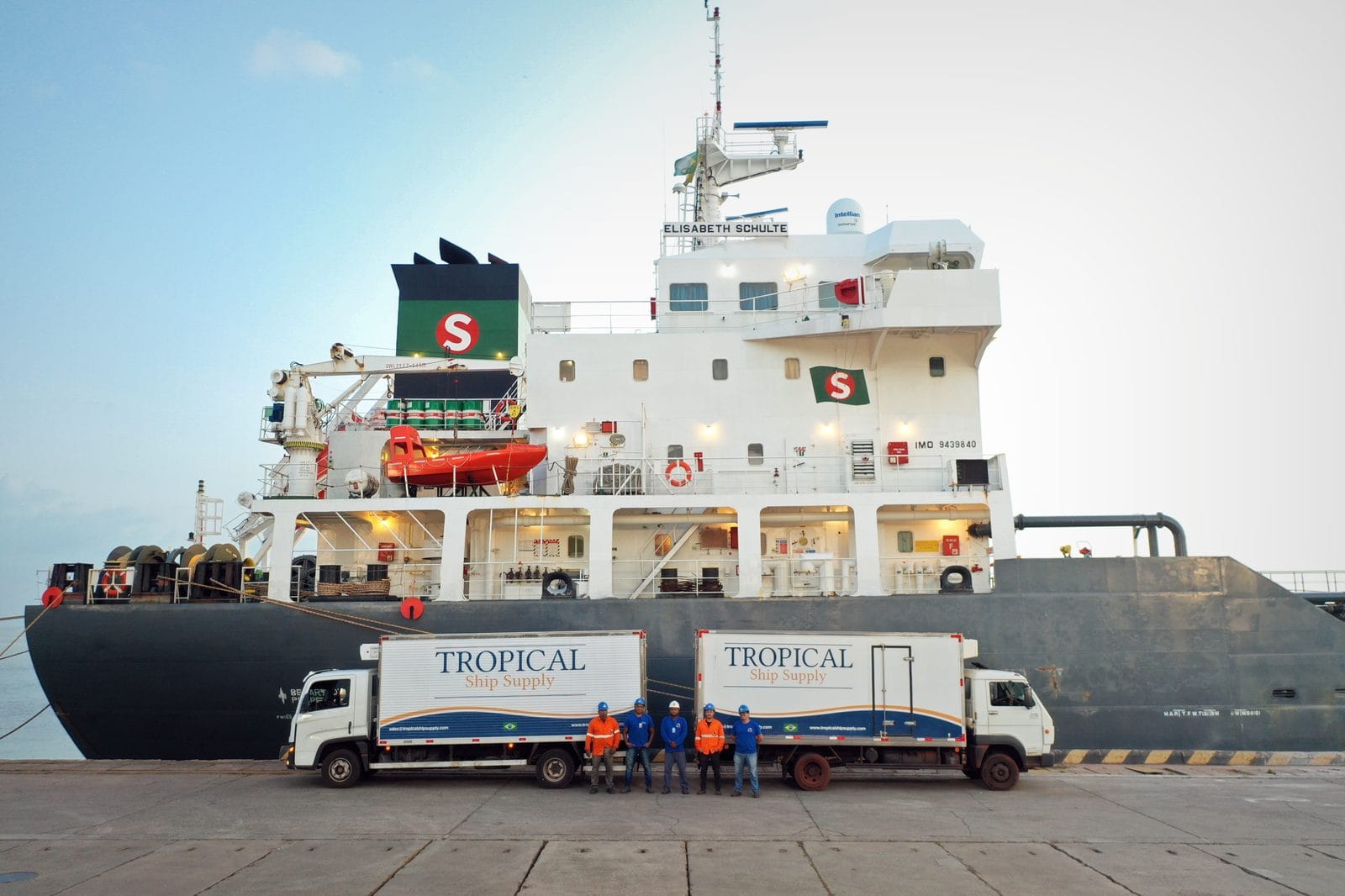
At a bulk port the order rarely fails because someone forgot it. It fails because the window moved.
Itaqui runs on loading rates, not on schedules. A berth window announced on Monday can shift by
half a day on Tuesday, and a supplier working out of Santos or Rio finds out too late to do
anything about it. The truck is already on the road, or it has not left.
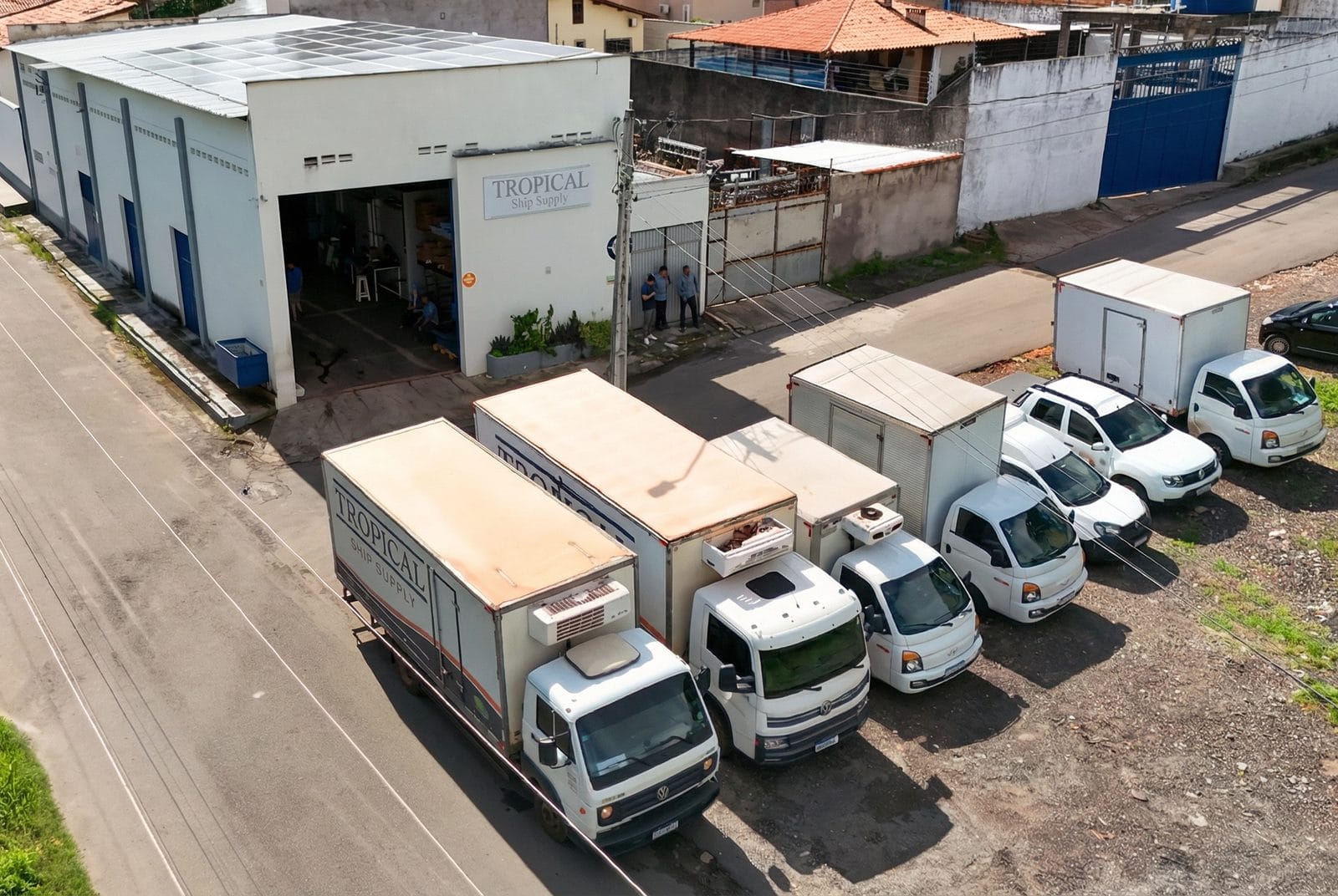
Ours does not have to travel. The warehouse is in São Luís, with the cold rooms and the
refrigerated trucks in the same building. That is the whole mechanism. It is not a statement about
attitude, it is a distance.
What calls at Itaqui
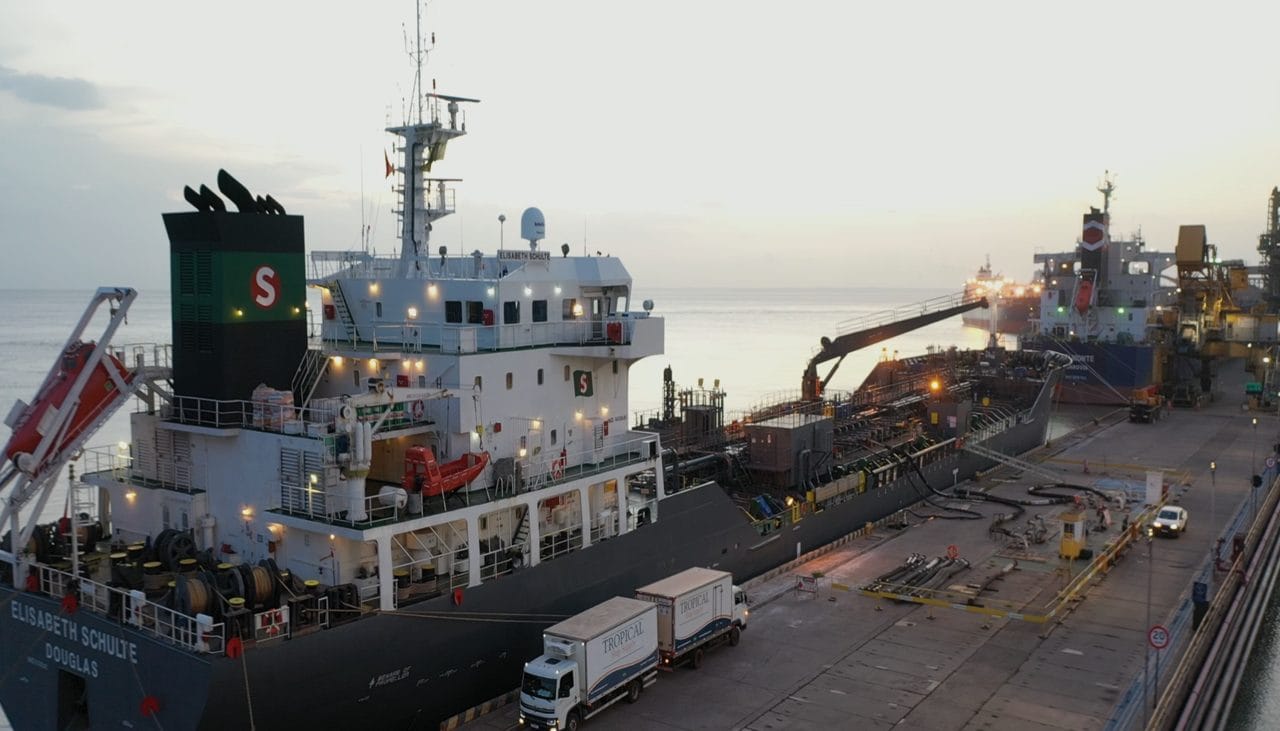
The Port of Itaqui, in São Luís, Maranhão, is the third largest
soybean-exporting port in Brazil and sits at the sea end of the
Arco Norte corridor,
the route that carries grain from Mato Grosso and Matopiba north instead of south to Santos.
It is a multipurpose public port. Bulk carriers loading soybeans and corn dominate the calendar,
alongside fertiliser, fuel and general cargo. Next door, the terminals of
Ponta da Madeira and Alumar push the city’s totals higher still:
Ponta da Madeira alone loaded 168 million tonnes of iron ore in 2024, of which
110.2 million tonnes went to China.
Two consequences for anyone planning a call. Loading rates are high, so the berth window is
short and the queue behind you is real. And a large share of the crews arriving here are Chinese,
Filipino and Indian, which changes what a provisions list should contain before anyone writes it.
What we put on board
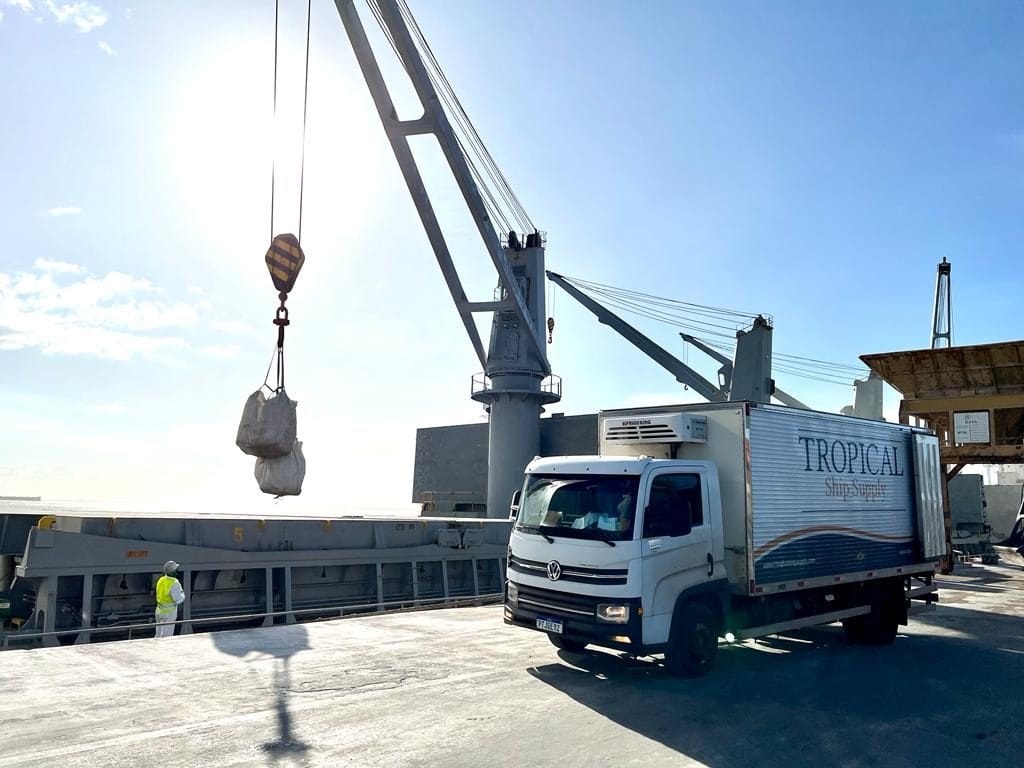
- Provisions: fresh, frozen and dry stores, carried in our own refrigerated trucks
- Bonded stores: under customs seal, with the documentation the call requires
- Deck and engine stores: ropes, paints, tools, lubricants, chemicals, consumables
- Cabin stores: linen, laundry and cleaning for the accommodation
- Safety and hygiene supplies: safety gear, fire extinguishers, electrical supplies
- Charts and publications, kept updated
- Spare parts
The cold chain does not break between our door and the ship’s side, because there is no third
party in the middle of it.
Ordering for a call at Itaqui
Send the vessel’s name and IMO number, the port, the ETA and the requisition. A spreadsheet or a
PDF is fine. There is no ordering system to learn and no account to open first. We quote back by
e-mail, against that requisition, for that call.
Two things decide whether the delivery lands inside the window, and both are worth sending in
the first message:
- The agency handling the call. Gate access and the delivery slot go through them,
and finding out who they are on the day costs hours - Anything bonded, flagged as bonded. Customs documentation takes longer than the
goods do. Flagged late, it is the item that misses the sailing
We answer 24/7, in Portuguese and English. When the ETA moves, and at a bulk port it moves, tell
us as early as you can and the order moves with it.
The other São Luís terminals
São Luís is one port city with several terminals, each with its own access and its own routine.
We serve all of them:
- Ponta da Madeira, the iron ore terminal, the largest of its kind in Brazil
- Alumar, the alumina and aluminium terminal
- Itaqui, the public multipurpose port
- The anchorage, for vessels waiting or not berthing at all
Tropical Ship Supply is a member of IMPA, the International Marine Purchasing
Association, and supplies vessels at Brazilian ports from the south-east coast to the Amazon river.
We write about how calls at Brazilian ports actually run in our
Brazil maritime news and port guides.
Planning a call at Itaqui? Send the vessel, the IMO number, the ETA and the requisition to
quotation@tropicalshipsupply.com and
we will come back with a quotation.