As a provider of ship supplies and maritime support, we know the sea is as much about people as it is about ships. The lives, dignity, and safety of those who work and travel the world’s waters must remain at the core of our industry. Recent advances in maritime human rights have put new tools and responsibilities in our hands. Few efforts display this better than the BlueRights project, whose training and research are shaping how we think about legal protection at sea.
The springboard: BlueRights training in Malta
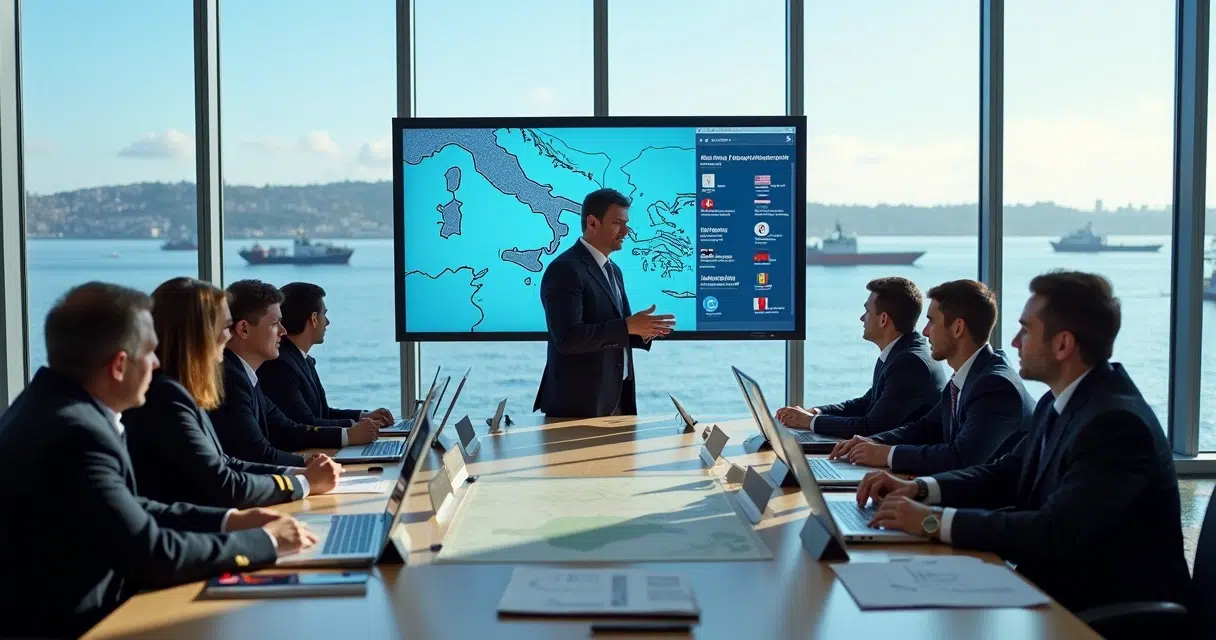
In May, the BlueRights project led an intensive training event at the IMO International Maritime Law Institute (IMLI) in Malta. The focus: the legal protection of people at sea, guided by current international law. We learned quickly that responsibilities on the high seas are fragmented, and the rules are often less clear than one might expect.
Under the guidance of Prof. Richard Barnes (University of Lincoln and NCLOS/UiT) and Dr. Jessica Schechinger (NCLOS/UiT Faculty of Law), the training honed in on the right to life at sea, particularly in critical moments such as search and rescue operations, when the use of force might be necessary, and when workers are exposed to serious risks during their duties.
The program welcomed early-career academics and graduate students bringing experience from coast guards, navy services, government, and law. Through mini lectures and practical scenarios, we saw that the limits of international human rights law are tangible when applied offshore.
Legal frameworks: a patchwork, not a net
The training broke down how international human rights law, the European Convention on Human Rights, the UN Convention on the Law of the Sea, maritime rules, and humanitarian law all interact. Instead of finding a seamless system, we discovered a tangle of overlapping, sometimes conflicting frameworks. That overlap creates confusion – not just for policy makers, but for anyone trying to ensure safety and rights on the water.
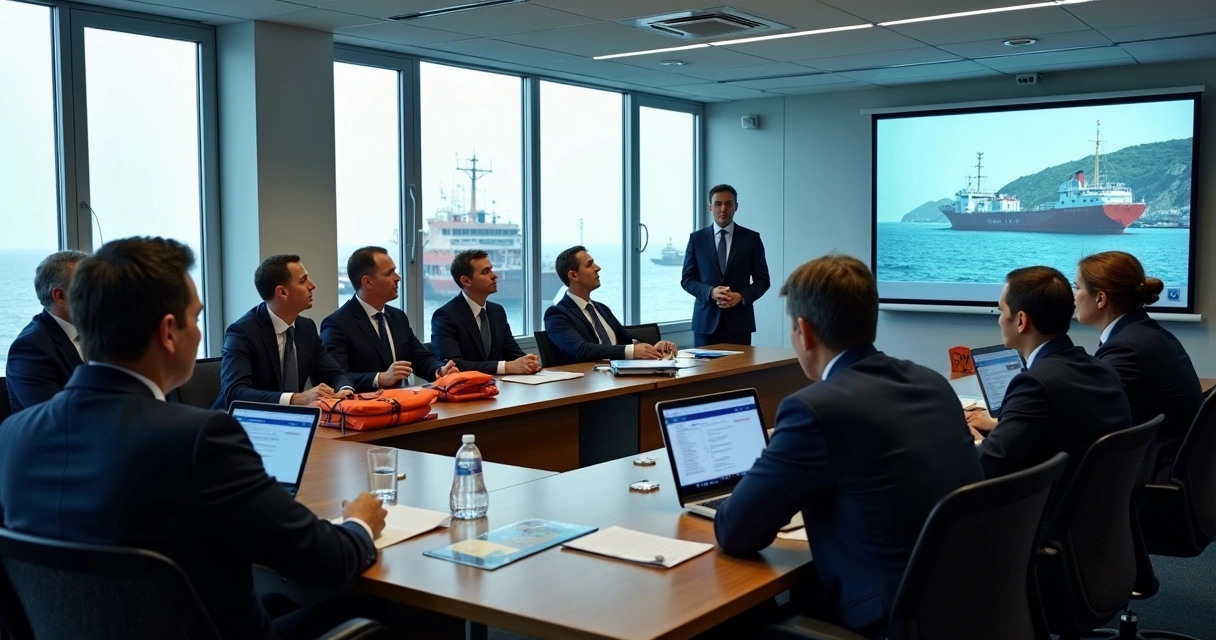 Scenarios presented in the training made it plain. For example, we applied different laws to simulated rescue situations at sea, only to hit blurred lines:
- Who, exactly, carries the legal duty to ensure a safe rescue?
- What situations genuinely count as “distress” under international regulations?
- When is the use of force justifiable, and who decides?
Participants repeatedly found that legal regimes are complex and their boundaries unclear. This is a reality many shipowners, crew, and agents know from hard experience.
Feedback and gaps: what we heard
Feedback from this high-level training echoed what we see in the field. There is not always consensus among states, and standards for rescue or fair treatment vary widely. For some, real access to justice seems out of reach. Perhaps most worrying, there is often a gap between understanding the rules on paper, and knowing how to use them in a crisis at sea. This confusion leaves seafarers, officials, and companies exposed to risks and liabilities they often cannot foresee.
The BlueRights network: building answers together
BlueRights is funded by the COST Association and links over 200 experts around the globe, bringing together specialists in law, human rights, fisheries, shipping, and enforcement. Its network has a clear goal: to close the gaps in human rights implementation at sea. Many onboard and in port are not yet well-versed in their rights and obligations—especially regarding safe working conditions, rescue procedures, and health protection.
Activities include scientific studies, policy briefings, and easy-to-use reference guides for both regulators and sea professionals. A report on a BlueRights training event at IMLI confirmed how practical exercises showed the real-world difficulties ships and crews face applying legal rules relating to search-and-rescue, use of force, and work hazards. Our partnerships with other organizations, like Human Rights at Sea, further strengthen this cause.
 We have seen BlueRights using international conferences, such as the UN Oceans Conference, and workshops to raise awareness. It is also actively contributing to a new International Law Association report focused on protecting people at sea using existing legal standards and highlighting the places where those laws are weakest.
Lessons for our industry
As a maritime supply company, we are not lawmakers—but we are deeply invested in the wellbeing of every person aboard the vessels we serve. We believe the BlueRights project’s three core focus areas map directly onto the lives of our clients and their crews:
- The right to life, especially where search and rescue and safety equipment are concerned
- The right to liberty, including the fair treatment of crews and freedom from arbitrary detention
- The protection of health, through both working conditions and emergency medical support
With Prof. Barnes leading the “right to life” working group, initiatives keep growing that provide both the research and practical guidance crews need to feel confident about the laws keeping them safe. The Maritime Law Institute wants ongoing input from BlueRights, aiming to better integrate human rights in the training for future maritime professionals.
We know from experience supplying ships across Brazil’s ports that strong governance, clear guidelines, and embedded responsibilities mean better welfare outcomes at sea. Studies such as the Delivering on Seafarers’ Rights Progress Report show that structured processes—not just goodwill—are what anchor a culture of safety, dignity, and operational resilience for seafarers.
Effective policy requires good law, but also simple and practical tools. An IMO Legal Affairs Office workshop recently highlighted the problem of weak domestic lawmaking and the need for practical capacity building to make international conventions work everywhere, on every vessel.
For us at Tropical Ship Supply Ltd., this means not only delivering the products ships need, but also operating as a partner who upholds integrity, reliability, and the highest standards for everyone involved.
Building the future, together
The BlueRights project is still in motion. Early results already show its power to raise awareness and encourage collaboration among all who have a stake in the future of maritime work. Our own commitment at Tropical Ship Supply Ltd. extends beyond cargo and provisions; we actively support fair, safe, and transparent practices at every port.
Find more resources you need about Brazilian ports, maritime compliance, and vessel assistance in our detailed guides and news sections:Brazilian ports essential info for vessels,latest maritime news,and our maritime blog.
Trust us to keep your vessel supplied, your crews cared for, and your operations running within the best standards—every step of the way. If you are looking to reduce costs without losing reliability for your calls in Brazil, our local assistance across key ports means you do not need to compromise on time, quality, or care.
Let’s work together for safer, fairer seas.
Contact our team and request a quote to start a conversation about your needs.
Frequently asked questions
What are maritime human rights?
Maritime human rights are the set of internationally recognized rights that apply to all people at sea, including crew, passengers, and those encountered in rescue or enforcement operations. These rights include the right to life, fair treatment, liberty, access to health, and protection from abuse, aligned with both international conventions and regional agreements.
Why are human rights important at sea?
Human rights at sea ensure that all people working or traveling on ships are treated fairly, kept safe, and have access to justice and health care, regardless of where a vessel sails. The sea’s legal complexity can leave people vulnerable if their rights are unclear, unprotected, or ignored, making consistent standards vital in this global industry.
How does BlueRights protect seafarers?
BlueRights helps seafarers and maritime professionals by providing education, practical guidelines, and policy briefings focused on legal protection at sea. Its network of experts researches current law, identifies gaps, and advocates for stronger policies and training to ensure rights are understood and enforced across all situations.
What common violations happen on ships?
Common violations include denial of rescue, poor working conditions, arbitrary detention, lack of medical care, excessive use of force, and inconsistent standards for safety or health. These problems are often linked to confusion about legal duties or gaps in training and compliance.
How can I report a rights violation?
If you witness or experience a rights violation at sea, first report it to the ship’s master and your company’s designated person or legal advisor. You can also contact relevant national authorities, port state control, or specialized NGOs such as Human Rights at Sea. For more guidance on compliance and reporting, consult dedicated resources such as our SOLAS safety and compliance guide.